
Influencer Pricing Benchmark Guide 2026
The definitive brand-side guide to influencer pricing in 2026. Benchmark rates across Instagram, TikTok, YouTube, and LinkedIn by follower tier, content format, and niche — so you always know what you should be paying before you open a negotiation.
Influencer marketing budgets are being wasted every day — not because the channel does not work, but because brands are paying the wrong rates for the wrong reasons. Some are significantly overpaying for reach that does not convert. Others are underpaying and accessing creators who are unmotivated, uncommitted, or simply not the right fit. And many are negotiating blind — without any reliable benchmark data to anchor their decisions.
This guide exists to fix that. The LMG Media Influencer Pricing Benchmark Guide 2026 is built from real campaign data, creator negotiation experience, and market research across the four primary influencer marketing platforms — Instagram, TikTok, YouTube, and LinkedIn. It covers every major creator tier from nano to mega, every primary content format, and every significant niche vertical — giving brand marketers and agency teams the data they need to budget accurately, negotiate confidently, and allocate spend efficiently.
Pricing in influencer marketing is not fixed — it is a negotiation, and the brands that negotiate best are those that understand what drives rate variation. This guide does not just give you numbers. It explains the factors that push rates up and down — platform, follower tier, engagement rate, content format, usage rights, exclusivity, niche category, and geographic market — so you can evaluate any rate you receive against an informed framework rather than guessing whether it is reasonable.
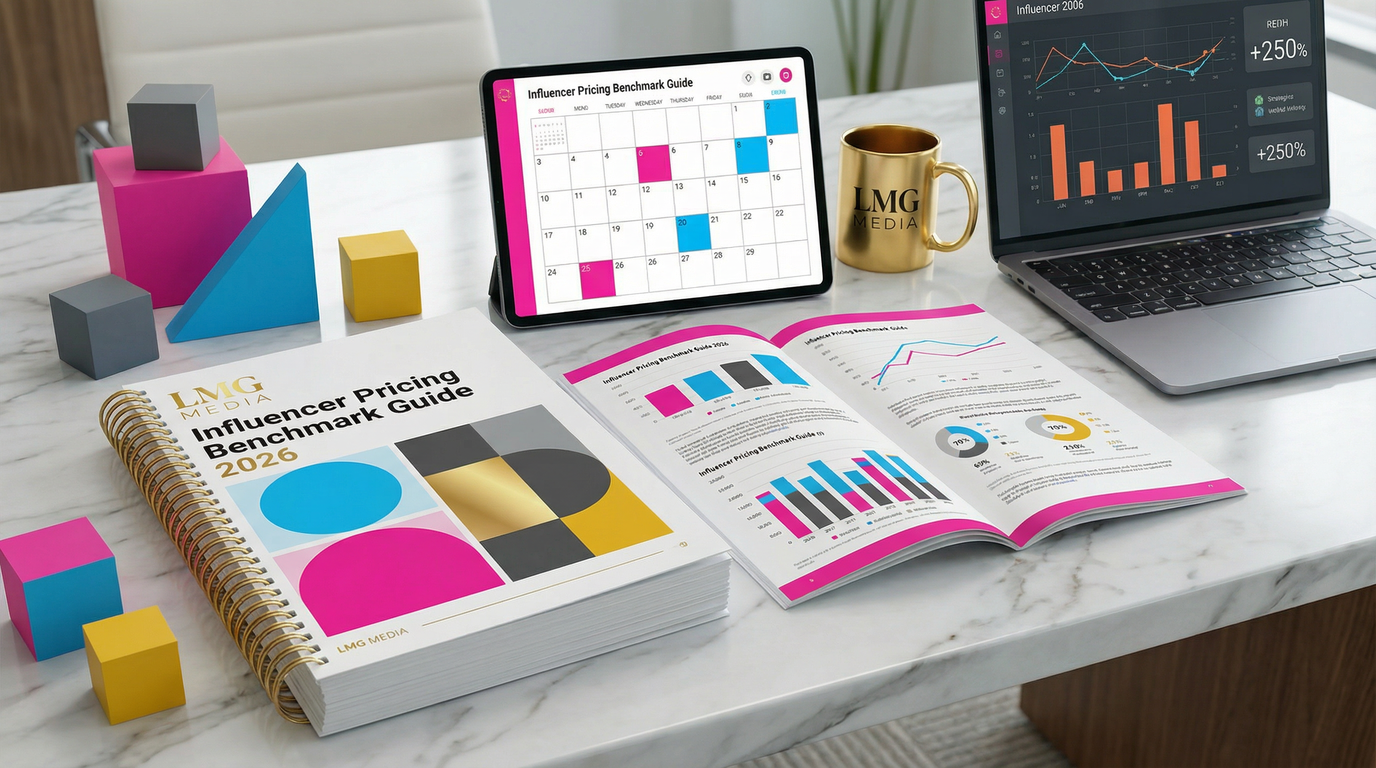
Inside you will find benchmark rate tables for Instagram (feed posts, Reels, carousels, and Stories), TikTok (standard video and TikTok Shop), YouTube (dedicated videos, integrated mentions, and Shorts), and LinkedIn (posts and newsletters). Each table is broken down by follower tier — nano, micro, mid-tier, large, and mega — and accompanied by guidance on the factors most likely to move rates above or below the benchmark in each category. You will also find a section on additional fees — usage rights, exclusivity, paid amplification, and whitelisting — which are frequently the source of the largest budget surprises in influencer campaigns.
The guide closes with a practical negotiation framework — how to approach rate discussions with creators and their representatives, what to push back on, what to accept, and how to structure deals that are fair to both sides and set the partnership up for genuine creative collaboration. Download it, share it with your team, and use it as your standard reference every time you open a creator budget conversation.