Introducing the Influencer Contract Generator: Build Professional Agreements in Minutes
Maya signed a contract for $5,000, missed a clause about paid ads, and watched brands use her content for months without additional payment. She should have earned $13,000. Generic contract templates don't protect creators—they protect brands. Introducing a contract generator that builds creator-friendly agreements customized for your specific deal in minutes.
The Contract That Cost $8,000
Maya was thrilled when a major skincare brand reached out. They wanted a three-month partnership with monthly content deliverables. The rate was $5,000, her biggest deal yet.
The brand sent their contract. Maya read through it quickly, saw her payment amount, and signed. She was ready to get started.
Two months in, everything changed. The brand started running paid ads with her content without additional compensation. When she pointed out that wasn't part of the agreement, they showed her clause 7.3: "Brand retains right to use content for marketing purposes including paid promotion." She'd missed it completely.
Then they extended the campaign to six months instead of three, citing vague language about "campaign duration to be mutually agreed." When she tried to negotiate additional payment, they claimed the original fee covered the full partnership.
By the end, Maya had created twice as much content as expected, her face was on paid ads across Instagram and Facebook, and she'd been blocked from working with three competitors for nearly a year due to an exclusivity clause she hadn't properly understood.
She didn't get a single dollar more than the original $5,000. Based on what she actually delivered and the rights she granted, she should have earned at least $13,000.
The problem wasn't that Maya didn't have a contract. The problem was that she signed a contract designed to protect the brand, not the creator.

Why Generic Templates Don't Protect You
Search for "influencer contract template" and you'll find hundreds of free downloads. They look official with legal-sounding language and fill-in-the-blank sections for names and dates. Most creators download one, fill it out, and assume they're protected.
They're not.
Generic templates have a fundamental flaw: they're one-size-fits-all documents trying to cover situations that are completely different. A single Instagram post needs different contract terms than a six-month brand ambassadorship. A $500 product review requires different protections than a $5,000 campaign. Organic content rights are completely different from paid advertising licenses.
One template can't possibly account for all these variables, so most generic contracts either include everything and become overwhelming, or they stay vague and leave you vulnerable to the exact issues Maya faced.
Even worse, many of the most popular templates online were written by brands or agencies to protect their interests, not yours. The language favors the party hiring you. The default terms tend to grant broad rights while limiting your protections. They're designed to be easy for brands to use, which means they're probably not great for creators.
The Real Cost of Bad Contracts
Let's talk about what inadequate contracts actually cost creators beyond just missed payments.
Without clear usage rights terms, brands can use your content in ways you never intended and wouldn't have agreed to. That $1,000 Instagram post ends up on billboards, in national TV commercials, or running as ads for years. You granted them those rights without realizing it, and now you can't get additional compensation.
Without proper payment terms, you have no protection when brands delay payment for months. There's no upfront payment requirement, so you create content before receiving anything. There are no late fees, so brands can pay you whenever it's convenient for them. There's no kill fee, so if they cancel mid-project after you've invested hours of work, you get nothing.
Without clear deliverables and revision policies, you end up in endless rounds of changes. The contract says "reasonable revisions" but doesn't define what that means, so brands can request the seventh version of your content and you have no leverage to push back.
Without limited exclusivity terms, you lock yourself out of entire categories of brand partnerships for months or even years. You agree to "not work with competing brands" without realizing that clause prevents you from working with fifteen different companies in your niche, costing you tens of thousands in lost opportunities.
These aren't hypothetical problems. This happens to creators every single day because they're using contracts that don't actually protect them.
Why We Built This Generator
After seeing thousands of creators get locked into unfavorable terms through generic contracts, we realized the solution isn't just better templates. Creators need a tool that builds contracts specifically for their situation, with terms that actually protect them.
Every brand deal is unique. The contract for a single TikTok video should look completely different from the contract for a long-term partnership. A product review agreement needs different clauses than an event coverage contract. The usage rights for organic posts are fundamentally different from the rights required for paid advertising.
A static template can't adapt to these differences. But a generator that asks about your specific deal and builds the contract accordingly? That actually works.
We built this generator to do what generic templates can't: create customized, creator-friendly contracts that match your exact situation.
How the Generator Actually Works
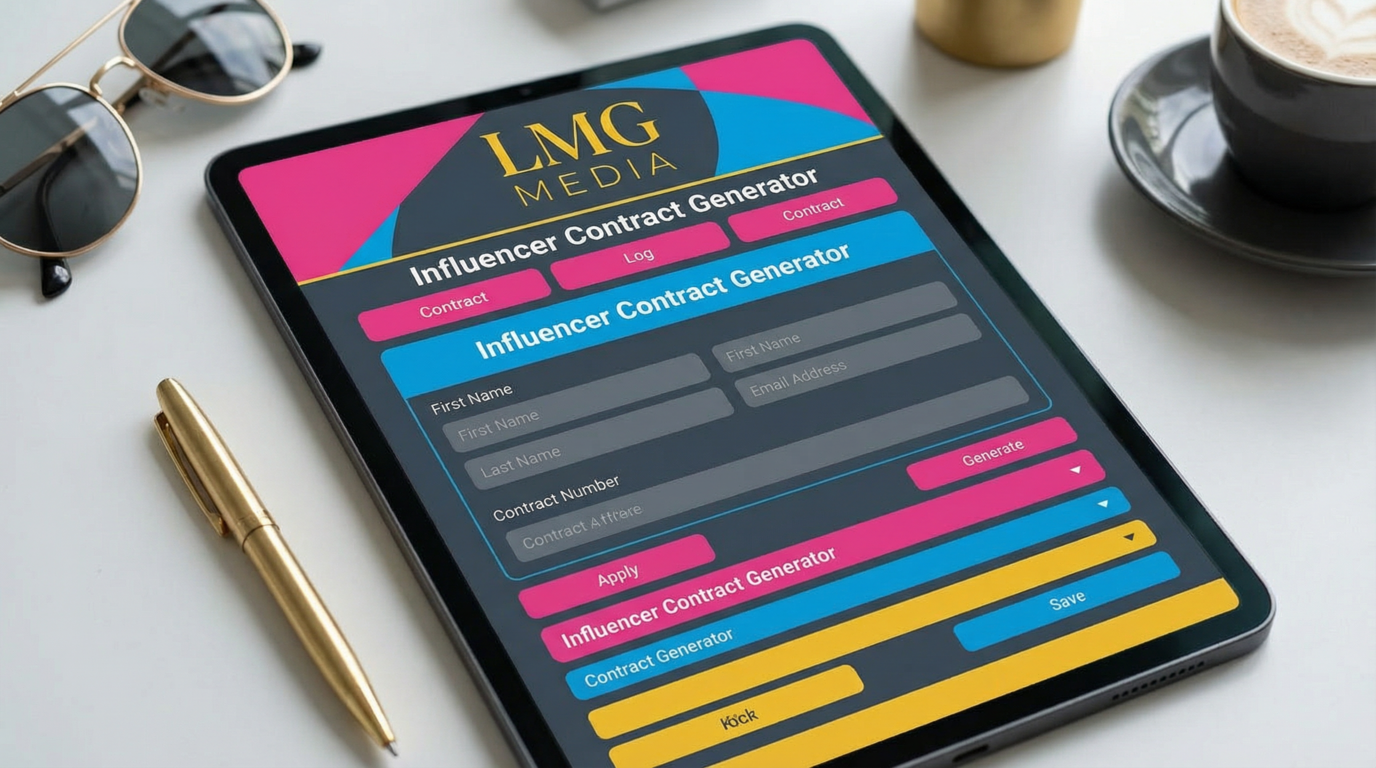
The contract generator walks you through four simple steps, but behind the scenes, it's making sophisticated decisions about which clauses to include and how to word them based on your specific deal.
First, you select your deal type. Are you creating a single post, running a multi-post campaign, entering a long-term partnership, becoming a brand ambassador, doing a product review, covering an event, or licensing existing content? Each deal type triggers different recommended contract sections because each type needs different protections.
A single post needs a straightforward agreement focused on deliverables, payment, and basic usage rights. A long-term partnership needs comprehensive terms covering performance expectations, termination clauses, and quarterly review processes. An event coverage contract needs specific timing terms and provisions for last-minute cancellations. The generator knows which sections each deal type requires.
Second, you choose your contract sections. The generator pre-selects the recommended sections for your deal type, but you can add or remove sections as needed. Want to include a detailed revision policy? Add it. Don't need exclusivity terms because the brand didn't request it? Skip that section. You're building a contract with exactly what you need, nothing more and nothing less.
Each section comes with multiple variations. For payment terms, you can choose 50/50 split, 100% upfront, milestone-based payments, or custom schedules. For usage rights, you can select limited one-year licenses, extended two-year terms, perpetual licenses with premium pricing, or organic-only licenses that prohibit paid advertising. Every option is explained so you understand what you're agreeing to.
Third, you customize each section with your specific details. Input your contract amount, your payment preferences, your deliverable timeline. Select the usage duration and platforms. Specify exclusivity periods if needed. The generator takes your inputs and translates them into proper legal language that clearly protects your interests.
Throughout this process, the generator provides guidance. When you're customizing payment terms, it reminds you that 50% upfront is standard and late fees protect you from delayed payments. When you're setting usage rights, it warns you that perpetual licenses should cost significantly more than limited terms. When you're defining exclusivity, it recommends limiting duration and scope to preserve your future opportunities.
Finally, you preview and download your contract as a professional PDF. The finished document looks like it was drafted by a lawyer, with proper legal structure, clear section headers, and comprehensive terms. But unlike a lawyer-drafted contract that might cost hundreds or thousands of dollars, you just built this in about five minutes for free.

What Makes This Different
Most contract tools give you a template and wish you luck. This generator is built specifically for creators, with every clause designed to protect your interests rather than the brand's.
The default terms favor you, not the brand. Payment structures include upfront payments and late fees. Usage rights are limited in duration and scope unless you explicitly choose otherwise and get paid accordingly. Revision policies cap the number of rounds. Exclusivity terms are narrow and time-limited. These aren't the terms brands want, but they're the terms you need.
The generator is educational, not just transactional. It explains why each clause matters and what you're protecting yourself against. When it recommends 50% upfront payment, it explains that this protects you if the brand cancels. When it suggests limiting usage to one year, it shows you the value of retaining long-term rights to your content. You're not just getting a contract, you're learning how to think about contract terms.
It adapts to real-world deal types. The contract for a single Instagram post looks completely different from the contract for a six-month brand ambassadorship because those situations need different protections. The generator understands these differences and builds accordingly.
And it's accessible. You don't need legal knowledge to use it. You don't need to understand contract law. You just need to know the basic details of your deal, and the generator handles the rest.
Who This Is For
This generator is for any creator who works with brands and needs to protect themselves legally. If you're currently using generic templates and hoping they're adequate, this is for you. If you've been signing brand contracts without changes and suspect you might be giving up too much, this is for you. If you're tired of feeling like you don't understand what you're agreeing to, this is for you.
It's particularly valuable for creators who are professionalizing their brand partnerships. You're moving beyond occasional collaborations to regular paid deals. You're working with bigger brands and larger budgets. You need contracts that reflect this professional level.
You don't need to be a full-time creator or have a massive following to benefit from proper contracts. Even if you're doing one brand deal every few months at a few hundred dollars each, those deals deserve proper protection. Over time, proper contracts save you thousands in protected payments, limited usage rights, and preserved opportunities.
Start Protecting Your Work
Every brand deal you do without a proper contract is a risk. You're hoping the brand will be fair, hoping they won't exploit vague language, hoping they'll pay on time and respect reasonable boundaries.
Professional creators don't operate on hope. They operate on clear, written agreements that protect their work, their time, and their value.
The difference between a generic template and a customized contract is often thousands of dollars in protected rights, prevented scope creep, and preserved opportunities. It's the difference between signing away perpetual usage rights for a base rate and negotiating a fair fee for the actual value you're providing.
Stop downloading generic templates that might not protect you. Stop signing brand contracts without clear creator protections. Build contracts that actually work for your specific deals.
Access our influencer contract generator
No signup required. Professional PDF output. Built for creators who are ready to protect their work properly. Choose your deal type, customize your terms, download your contract. Five minutes to proper protection.
Your content has value. Your time has value. Your rights have value. Make sure your contracts protect all of it.