
AI Influencer Marketing: The Brand's Guide to Working with Virtual Creators
Learn what AI influencers are, how leading brands are using virtual creators, and what to consider before adding them to your influencer marketing strategy. A complete guide to the opportunities, risks, and practical realities of AI influencer marketing.
LMG MEDIA TEAM
· 19 MAR 2026 · 9 MIN READ
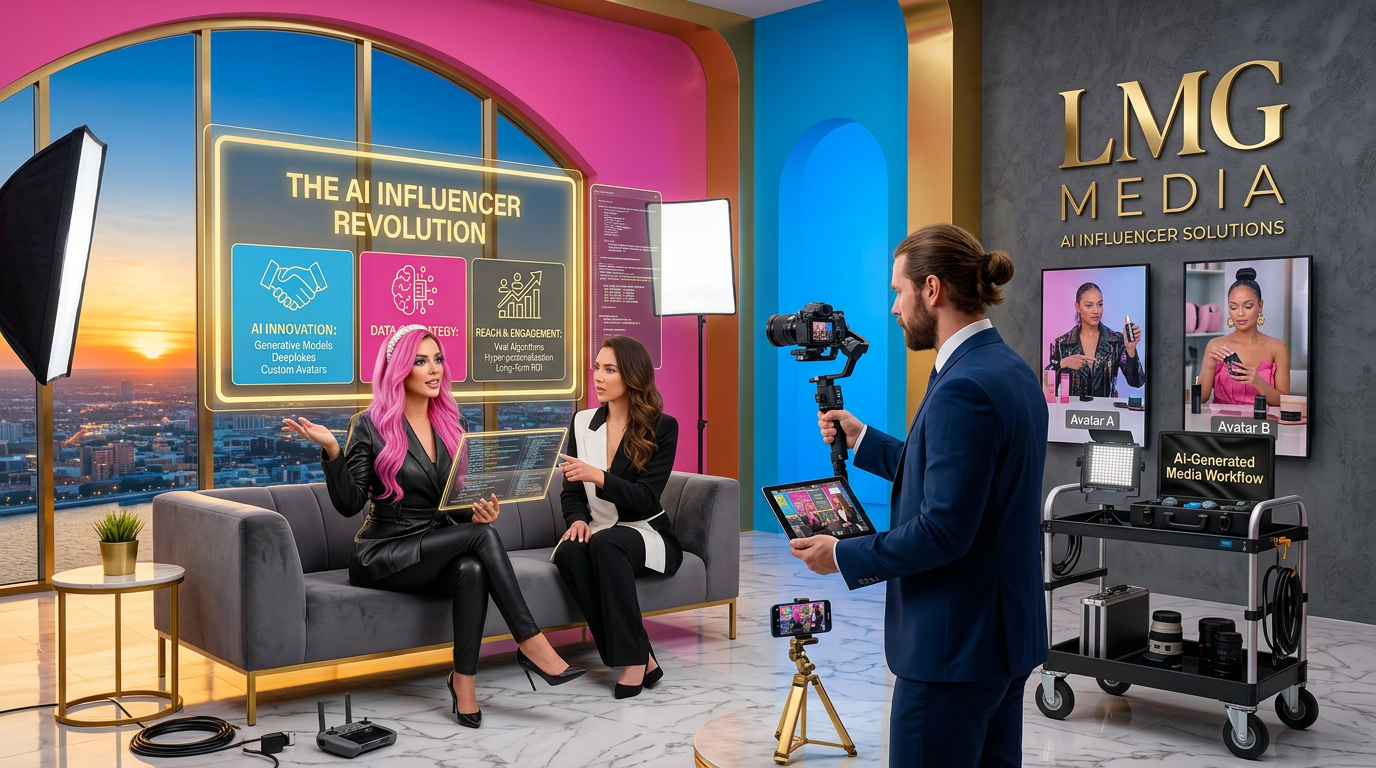
AI influencers — computer-generated virtual characters with social media presences — are no longer a novelty or a conversation piece. Several virtual creators have amassed millions of followers, secured partnerships with major global brands, and generated significant media coverage and commercial results. The category is growing, the technology is improving rapidly, and brands that understand how to use virtual creators strategically are building genuine competitive advantage.
But AI influencer marketing is also one of the most misunderstood areas of the creator economy — frequently overhyped, frequently misapplied, and surrounded by legitimate ethical and commercial questions that brands need to answer before investing.
This guide covers what AI influencers actually are, how leading brands are using them effectively, what the genuine risks and limitations are, and how to decide whether virtual creators have a role in your influencer marketing strategy.
What Are AI Influencers?
AI influencers — also called virtual influencers or CGI influencers — are digitally created characters that maintain social media presences, post content, and engage with audiences in the same way human creators do. They have constructed personalities, visual identities, backstories, and aesthetic worlds. They post on Instagram, TikTok, and YouTube. They take brand partnerships. They have fan communities.
The most well-known virtual influencers include Lil Miquela, who has accumulated millions of Instagram followers and partnered with brands including Calvin Klein, Prada, and Samsung; Imma, a Japanese virtual influencer who has collaborated with IKEA and Porsche; and Shudu Gram, created by photographer Cameron-James Wilson and widely cited as the world's first digital supermodel.
The technology underlying virtual influencers ranges from sophisticated 3D CGI rendering with teams of creatives managing the character's content and persona, to AI-generated imagery produced at scale with minimal human involvement. The distinction matters for brands: the former are managed creative properties with consistent identities and genuine strategic value; the latter are often lower-quality, less coherent, and carry higher reputational risk.
Why Brands Use AI Influencers
Complete Creative Control
The most significant commercial advantage of AI influencer partnerships is total control over the creative output. A virtual influencer will never go off-message, post controversial content on their personal accounts, be photographed in compromising situations, or publicly contradict brand values. For brands in regulated industries, or brands for whom reputational risk is a primary concern, this level of control is genuinely valuable.
Availability and Scalability
Virtual influencers can produce content at scale, in any location, in any setting, at any time — without the logistical constraints of working with human creators. A campaign that would require travel, scheduling, production teams, and weeks of coordination with a human creator can potentially be produced more quickly and at lower cost with a virtual influencer.
Aesthetic Consistency
Virtual influencers maintain absolute visual consistency across all content. Their appearance, styling, and aesthetic world never change unless the brand chooses to update them — which is valuable for brands with highly specific visual requirements.
Cultural Novelty and PR Value
Announcing a virtual influencer partnership still generates genuine media interest and social conversation. For brands looking to signal innovation, technological sophistication, or cultural edge, the novelty value of AI influencer partnerships provides earned media return that goes beyond the content itself.
Always-On Brand Alignment
Unlike human creators, virtual influencers do not have off-brand moments, personal opinions that conflict with brand values, or lives that exist outside the partnership. They are always, in every context, the character that the brand has partnered with.
Where Brands Are Using AI Influencers Effectively
Luxury and Fashion
The luxury and fashion categories have been early and enthusiastic adopters of virtual influencer partnerships. The highly controlled visual worlds of luxury brands align naturally with the total creative control that virtual influencers offer. Brands including Balmain, Burberry, and Prada have all incorporated virtual creators into campaigns. In luxury fashion, the distinction between reality and aspiration is already heavily constructed — a virtual influencer is simply a more explicit version of the world-building that luxury brands do constantly.
Beauty and Cosmetics
Beauty brands have found genuine utility in virtual influencers for product visualisation — demonstrating makeup looks, showcasing shade ranges, and creating aspirational beauty content without the variability that comes with working with human talent. Virtual beauty influencers can be configured to represent specific skin tones, skin types, and beauty aesthetics, making them useful tools for inclusive product marketing.
Tech and Gaming
Tech brands and gaming companies have used virtual influencers extensively, both because their innovation-adjacent positioning fits naturally with cutting-edge technology and because gaming audiences have pre-existing cultural familiarity with digital characters as real personalities. The crossover between virtual influencer culture and gaming character culture is significant and commercially useful.
Retail and Ecommerce
Ecommerce brands have used AI-generated influencers for product photography at scale — producing enormous volumes of product imagery showing items in lifestyle contexts that would be prohibitively expensive to produce with human models and real-world locations. This application sits at the intersection of AI influencer marketing and AI content production, and is growing rapidly.
The Genuine Risks and Limitations
Audience Trust and Authenticity
The fundamental value of influencer marketing is borrowed trust — the audience trusts the creator, and that trust extends to the brand they recommend. AI influencers complicate this dynamic in ways that are not fully resolved. Audiences who know they are being addressed by a computer-generated character may not extend the same trust they would to a human creator with genuine lived experience of the product.
Research on consumer responses to virtual influencers is mixed. Some studies indicate that younger, digitally native consumers are highly comfortable with virtual influencers and respond to their content positively. Others indicate that awareness of a creator's AI nature significantly reduces perceived authenticity and purchase intent. The response appears to be heavily dependent on category — luxury and tech audiences are more receptive than categories where genuine human experience is central to purchase trust, such as health, wellness, and parenting.
Disclosure Requirements
The regulatory position on AI influencer disclosure is still evolving, but the direction of travel is clear. In the UK and US, advertising regulators expect that consumers are not materially misled about the nature of the content they are consuming. Brands that use virtual influencers without clear disclosure — particularly if the virtual nature of the influencer is not immediately obvious — face regulatory risk.
The ASA in the UK has addressed the use of digitally altered imagery in advertising; the use of entirely virtual personalities in paid advertising content falls within the scope of the same transparency principles. The FTC in the US has similarly signalled that material connections — including the artificial nature of the spokesperson — must be disclosed clearly.
Brief your legal and compliance teams before any virtual influencer campaign, and err on the side of clear, prominent disclosure.
Brand Safety Considerations
While virtual influencers eliminate the personal conduct risk associated with human creators, they introduce a different category of brand safety consideration: the reputational risk of being associated with the technology itself. In cultural moments where AI is the subject of significant public debate — around employment displacement, authenticity, and ethics — brands that are heavily associated with AI influencer content may attract criticism from audiences who view it as inauthentic or ethically problematic.
Audience Engagement Limitations
Virtual influencers typically generate lower genuine engagement rates than human creators with equivalent follower counts. Audiences engage deeply with human creators partly because of the parasocial relationship they have developed — a sense of knowing the person behind the content. Virtual influencers, however well-constructed their personas, do not replicate this relationship with the same depth. Brands should calibrate engagement expectations accordingly.
When to Use AI Influencers vs Human Creators
AI influencers are not a replacement for human creator partnerships — they serve different functions and work best in specific contexts. Use this framework to determine where virtual creators fit in your strategy.
Consider AI influencers when:
- You need total creative control over content and brand representation
- The campaign is primarily visual and does not rely on personal endorsement or lived experience
- You are in luxury, tech, or fashion categories where virtual aesthetics have established precedent
- You are producing high volumes of product visualisation content where AI generation provides genuine cost efficiency
- The novelty value of a virtual partnership aligns with your brand's innovation positioning
Stick with human creators when:
- Audience trust and authentic personal experience are central to the purchase decision
- You are in health, wellness, parenting, fitness, or other categories where genuine human experience is essential to credibility
- Your target audience is older or less digitally native — these demographics show lower receptiveness to virtual influencers
- The campaign requires genuine community engagement and conversation
- Your brand positioning is built on human stories, real customer outcomes, or personal testimony
The strongest AI influencer strategies use virtual creators for specific campaign elements — visual content production, cultural novelty activations, highly controlled brand moments — alongside human creator partnerships that provide the authentic community trust that AI influencers cannot replicate.
Working with a Forward-Thinking Influencer Marketing Agency
The AI influencer space is evolving rapidly, and navigating it effectively requires staying ahead of both the creative opportunities and the regulatory and reputational risks.
At LMG Media, our AI influencer practice helps brands evaluate where virtual creators fit in their overall influencer strategy — and builds programmes that combine the creative control of AI partnerships with the authentic trust of human creator relationships. Get in touch to discuss how emerging creator formats could work for your brand.
Summary
AI influencers represent a genuinely new and evolving dimension of influencer marketing — with real commercial utility in specific contexts and real limitations that brands need to understand before investing. The key principles to carry forward:
- AI influencers offer total creative control, scalability, and aesthetic consistency — but cannot replicate the authentic trust of human creator relationships
- Luxury, tech, fashion, and ecommerce categories have the most established precedent for virtual influencer partnerships
- Disclosure is non-negotiable — regulatory expectations are clear and evolving in a direction of greater transparency
- Use AI influencers for specific campaign functions alongside human creator programmes, not as a replacement for them
- Monitor the cultural conversation around AI — brand association with AI content carries reputational considerations that vary significantly by audience and moment
More from the desk
FULL INDEX · 54 → Industry guidesTech Influencer Marketing: How B2B and Consumer Tech Brands Work with CreatorsNO. 21 · 9 MIN
 Industry guidesTravel Influencer Marketing: How Hospitality and Tourism Brands Partner with CreatorsNO. 20 · 9 MIN
 Industry guidesFood Influencer Marketing: How Restaurants and FMCG Brands Work with Food CreatorsNO. 19 · 9 MIN
LMG MEDIA · THE DESK
NO. 18 · FILED 19 MAR 2026 · LMG.MEDIA/BLOG
LMG.MEDIA/BLOG · © 2026
© 2026 LMG MEDIA
WHERE QUALITY BRANDS MEET ICONIC INFLUENCE