
Beauty Influencer Marketing: A Strategy Guide for Cosmetic Brands
Learn how beauty brands build high-performing influencer marketing campaigns. This complete guide covers creator selection, content formats, product launch strategy, affiliate programmes, and how to measure ROI across Instagram and TikTok.
LMG MEDIA TEAM
· 18 MAR 2026 · 13 MIN READ
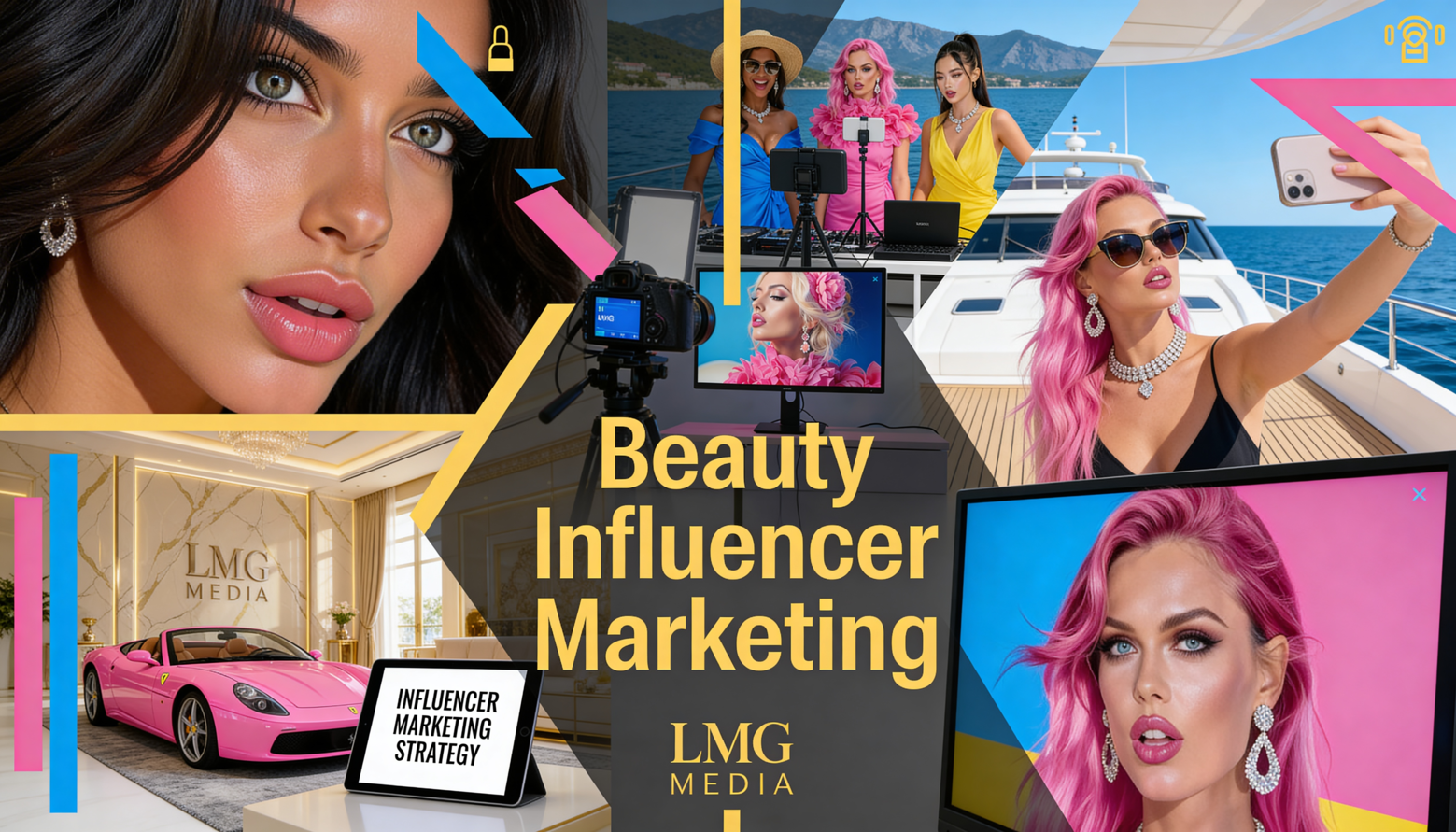
No category has been more fundamentally reshaped by the creator economy than beauty. Influencer marketing did not simply become an effective channel for beauty brands — it became the channel. The vast majority of beauty product discoveries, brand introductions, and purchase decisions now pass through creator content at some point in the journey.
The brands that understand this and invest in creator partnerships strategically are growing rapidly. The brands that treat influencer marketing as a supplementary activity — a few gifted products here, a paid post there — are losing ground to competitors who have made creators central to their go-to-market strategy.
This guide covers how to build a beauty influencer marketing programme that drives genuine results — from creator selection and product launch strategy to affiliate infrastructure, content formats, and measurement.
Why Influencer Marketing Is Fundamental to Beauty
The relationship between beauty consumers and creators is unlike almost any other category. When a trusted beauty creator recommends a foundation, a serum, or a lipstick, they are lending something deeply personal — their skin, their face, their expertise. That level of intimate endorsement carries a weight that no advertising format can replicate.
Several structural factors make influencer marketing uniquely powerful in beauty.
Demonstration is everything. Beauty products require showing, not telling. A creator applying a foundation on camera and showing the finish, coverage, and skin compatibility communicates more in 60 seconds than a month of banner advertising. The demonstration format is native to creator content and impossible to replicate in traditional media.
Trust in community recommendations is the primary purchase driver. Beauty consumers actively seek out reviews, tutorials, and honest opinions before purchasing — particularly for skincare and higher-ticket items. Creators who have built authority in beauty through consistent, honest content are trusted advisors to their audiences in a genuinely meaningful sense.
The TikTok effect on beauty is unparalleled. BeautyTok — the beauty community on TikTok — has made overnight viral launches a repeatable phenomenon. Products that receive genuine creator endorsement on TikTok can sell out within hours. This is not an accident of the algorithm — it reflects the depth of trust beauty audiences place in the creators they follow.
Content diversity matches category diversity. Beauty is a broad category — skincare, makeup, fragrance, haircare, nail, wellness, and men's grooming each have distinct creator communities, content formats, and audience expectations. This diversity means brands can find highly targeted creator audiences for virtually any product.
The Beauty Creator Landscape
By Platform
Instagram remains the primary platform for beauty influencer marketing, particularly for aspirational, luxury, and editorial beauty brands. The visual quality of Instagram content — particularly Reels and carousel posts — suits the aesthetic demands of prestige beauty. Instagram's shopping infrastructure and strong affiliate link ecosystem make it effective across the full funnel.
TikTok is now the most powerful discovery platform in beauty for brands targeting under-35 consumers. BeautyTok operates as an extraordinarily active community of creators, reviewers, and enthusiasts who produce and consume beauty content at scale. TikTok's algorithm means that a single piece of authentic creator content can reach millions of users who have never encountered the brand before. For product launches targeting mainstream and accessible beauty consumers, TikTok should be a primary investment.
YouTube is the dominant platform for long-form beauty content — in-depth skincare routines, full-face tutorials, honest product reviews, and seasonal favourites videos. YouTube beauty audiences tend to be more research-oriented and higher-intent, making the platform particularly effective for skincare and higher-consideration beauty purchases. Beauty hauls and annual favourites videos on YouTube consistently drive significant traffic and revenue for featured brands.
Pinterest drives meaningful referral traffic for beauty brands, particularly in skincare and nail categories. Creator content that is formatted for Pinterest discovery — high-quality imagery, step-by-step tutorials — can generate sustained organic traffic long after the original creation date.
By Creator Type
Beauty specialists and makeup artists with professional credentials bring technical authority that resonates strongly with engaged beauty audiences. Their product recommendations carry the weight of expertise, and their content tends to perform exceptionally well for skincare, foundation, and specialist product categories.
Lifestyle and beauty crossover creators produce beauty content alongside fashion, wellness, and everyday life content. Their audiences are broad and highly engaged, and they are effective for accessible and mass-market beauty brands looking to reach consumers who are beauty-interested rather than beauty-obsessed.
Micro-influencers in beauty are among the most effective in any category. Beauty micro-creators typically have deeply engaged niche communities — sustainable beauty, mature skin, textured hair, men's grooming, or budget beauty — and their product recommendations convert at significantly higher rates than larger creators in the same space. A well-structured micro-influencer seeding programme is one of the highest-ROI investments available to beauty brands.
Dermatologists, aestheticians, and skincare professionals who maintain active social profiles represent a distinct and growing category. For skincare brands with science-backed formulations, partnerships with credentialed professionals provide a level of clinical authority that no lifestyle creator can offer. This category has grown substantially on TikTok — SkinTok and DermTok have made professional skincare expertise genuinely accessible and highly followed.
Men's grooming creators are an underserved but rapidly growing segment. As the men's grooming category expands, brands that invest early in relationships with male beauty and grooming creators are building audience access ahead of the competition.
Beauty Influencer Campaign Formats
Product Seeding and Gifting
Sending product to creators without a paid arrangement is the standard entry point for beauty brands — and in beauty, it works better than in almost any other category, because creators genuinely want to try new products and share their honest reactions with their audiences.
Effective beauty seeding is targeted and thoughtful. Send product to creators whose skin type, tone, concerns, or aesthetic align with your formulation. A matte foundation sent to a creator who consistently advocates for dewy, glass skin finishes is likely to generate a lukewarm review regardless of product quality. A serum targeting hyperpigmentation sent to a creator who regularly discusses skin tone concerns is likely to resonate deeply.
Presentation matters. A beautifully packaged gifting experience signals brand quality before the product is even opened, and creators are more likely to generate content for brands that have invested in the unboxing experience.
Paid Content Partnerships
Guaranteed, contracted deliverables in exchange for a fee. In beauty, the most common paid formats are:
Tutorial integrations — the creator incorporates your product into a makeup or skincare tutorial, demonstrating it in context alongside the rest of their routine. This is the highest-performing format for new product awareness because it shows the product in real use and provides a genuine demonstration of results.
Review and first impressions — the creator shares their honest reaction to using your product, typically in a talking-head or GRWM (Get Ready With Me) format. Authentic reviews — including honest discussion of what the product does well and where it has limitations — consistently outperform scripted endorsements. Brief creators for honesty, not hyperbole.
Dedicated product posts — a single post or video focused entirely on your product, typically used for major launches or hero SKUs. Best used selectively for high-priority moments in your marketing calendar.
Affiliate and Commission Programmes
Beauty is one of the strongest categories for affiliate influencer marketing. Creators share unique discount codes or trackable affiliate links, and brands pay commission on sales generated. The LTK (LikeToKnowIt), Skimlinks, and direct brand affiliate programmes have made this infrastructure widely accessible.
Affiliate models align creator incentives directly with brand revenue outcomes and work particularly well for mid-market beauty brands. Creators are motivated to post consistently and to produce content that converts — because their earnings depend on it. For brands with broad creator networks, affiliate programmes can scale organic content production significantly without requiring full paid partnerships for every creator.
Product Launch Campaigns
New product launches are the highest-stakes moments in any beauty brand's calendar, and influencer marketing is now the primary launch amplification vehicle for most beauty brands.
Effective launch campaigns typically involve three phases. In the pre-launch phase, select creators receive early access to the product under embargo — generating anticipation through teaser content, unboxings, and first-use reactions that land before the public launch date. On launch day, coordinated creator posting creates a moment of concentrated visibility across multiple channels simultaneously. In the post-launch phase, ongoing creator partnerships sustain awareness and provide the volume of authentic content needed to support retail and e-commerce conversion.
GRWM and Routine Content
Get Ready With Me content — in which creators walk their audience through their morning or evening routine while incorporating your product — is one of the most effective formats in beauty influencer marketing. It demonstrates the product in genuine use, positions it within a relatable daily context, and delivers the kind of authentic recommendation that beauty audiences respond to most strongly.
Creator Selection for Beauty Campaigns
Skin Tone and Type Diversity
One of the most important — and most frequently overlooked — dimensions of beauty creator selection is ensuring your creator roster reflects the genuine diversity of your customer base and your product range. Brands that exclusively partner with a narrow demographic of creators send a signal about who their products are for, and that signal is received clearly by the audiences who are and are not represented.
For foundation, concealer, and base product launches in particular, a diverse creator roster is not just ethically important — it is commercially essential. Consumers with a wide range of skin tones need to see their shade and skin type represented in creator content before they will purchase.
Authentic Product Alignment
The most important question in beauty creator selection is simple: would this creator plausibly use this product in their real life? A creator whose content is built around natural, minimal beauty routines is not the right partner for a full-coverage, high-drama foundation launch, regardless of their follower count or engagement rate.
Review the creator's existing content carefully. What products do they already use and recommend? What concerns, categories, and aesthetics dominate their content? The closer the alignment between your product and the creator's organic content, the better the resulting partnership will perform.
Engagement Quality
Look beyond overall engagement rate to the quality of beauty-specific engagement. Are followers asking for product information, requesting links, and sharing their own results in the comments? This kind of active, purchase-intent engagement is the strongest possible signal of a creator's commercial value to beauty brands.
Beauty Influencer Marketing Pricing
General pricing benchmarks for beauty content in 2026:
Instagram:
- Micro creators (5K–50K followers): £200–£2,000 per post
- Mid-tier creators (50K–300K followers): £2,000–£8,000 per post
- Large creators (300K–1M followers): £8,000–£30,000 per post
- Mega creators (1M+ followers): £30,000–£200,000+ per post
TikTok rates are typically 20 to 30 percent lower than Instagram equivalents. YouTube dedicated videos command a premium of two to three times the equivalent Instagram rate, reflecting the greater production investment and longer content shelf life.
Usage rights for paid media amplification — particularly for brands running creator content as paid social ads — carry a significant additional fee and should be negotiated upfront. For a full breakdown of influencer pricing across tiers and platforms, see our guide on [how much does influencer marketing cost].
Compliance in Beauty Influencer Marketing
Beauty is a heavily regulated category in addition to the standard influencer disclosure requirements that apply across all sectors.
Advertising disclosure. All paid beauty partnerships must be clearly disclosed in accordance with ASA guidelines in the UK, FTC guidelines in the US, and applicable regulations in other markets. Disclosure must be prominent and immediate — not buried in hashtags or post captions.
Claims compliance. Beauty product claims — particularly in skincare — are subject to strict regulatory standards. Creators must not make claims about your product that go beyond what the brand is permitted to claim. Brief creators explicitly on what they can and cannot say about your product's efficacy, and include approved claims language in your brief.
Before and after content. Regulatory guidance on before and after imagery is strict in most markets. Ensure creators understand what is and is not permissible before any content involving transformation claims is produced.
Measuring Beauty Influencer Campaign Performance
Awareness and Reach
Impressions, reach, and share of voice within the beauty creator community. Track whether campaign content is being picked up and referenced by other creators — organic amplification within BeautyTok or the Instagram beauty community is a strong signal of genuine resonance.
Engagement Quality
Saves, shares, and comment intent. In beauty, saves indicate that a viewer wants to return to the content — typically to reference a product, technique, or routine. High save rates on beauty content are among the strongest leading indicators of purchase intent available.
Conversion
Affiliate link clicks, promo code redemptions, product page traffic via UTM parameters, and direct sales attribution where possible. For DTC beauty brands, creator-specific discount codes provide clean conversion data at the individual creator level.
Content Asset Value
The volume and quality of brand-usable content generated across the campaign. Beauty creator content — particularly high-quality tutorial and lifestyle imagery — is a valuable asset for paid social, email marketing, and retail partner materials. Negotiate usage rights before the campaign begins and factor content value into your overall ROI calculation.
Earned Media and PR Value
Beauty influencer campaigns frequently generate secondary coverage — other creators referencing the content, press picking up on a viral product moment, or community discussion that extends reach far beyond the original paid partnership. Track brand mentions, hashtag volume, and earned media during and after campaign periods.
Working with a Beauty Influencer Marketing Agency
The beauty creator space requires deep category knowledge, strong existing creator relationships, and the aesthetic judgment to identify genuine brand-creator alignment before a single brief is written.
At LMG Media, our beauty influencer marketing practice works with cosmetic and skincare brands to build creator programmes that deliver genuine commercial results — from targeted micro-influencer seeding campaigns to major product launch activations across Instagram and TikTok. Our creator network spans markets including London, Paris, New York, Dubai, and Los Angeles. Get in touch to discuss how we can build a beauty influencer programme for your brand.
Summary
Beauty and influencer marketing are more deeply intertwined than in any other consumer category. The brands that win are those that treat creator partnerships as a core go-to-market strategy rather than a supplementary channel. The key principles to carry forward:
- Lead with authentic product alignment — creator fit is more important than follower count in beauty
- Invest in diversity across your creator roster — skin tone, type, age, and aesthetic diversity is both the right approach and the commercially effective one
- Make affiliate infrastructure a priority — beauty converts exceptionally well through affiliate models, and the infrastructure investment pays back quickly
- Brief for honesty — authentic reviews outperform scripted endorsements consistently in beauty
- Negotiate content usage rights upfront — beauty creator content is a valuable asset across paid social, email, and retail channels
More from the desk
FULL INDEX · 54 → Industry guidesTech Influencer Marketing: How B2B and Consumer Tech Brands Work with CreatorsNO. 21 · 9 MIN
 Industry guidesTravel Influencer Marketing: How Hospitality and Tourism Brands Partner with CreatorsNO. 20 · 9 MIN
 Industry guidesFood Influencer Marketing: How Restaurants and FMCG Brands Work with Food CreatorsNO. 19 · 9 MIN
LMG MEDIA · THE DESK
NO. 13 · FILED 18 MAR 2026 · LMG.MEDIA/BLOG
LMG.MEDIA/BLOG · © 2026
© 2026 LMG MEDIA
WHERE QUALITY BRANDS MEET ICONIC INFLUENCE