
Ecommerce Influencer Marketing: How Online Stores Drive Sales Through Creators
Learn how ecommerce brands build influencer marketing campaigns that drive direct sales. This complete guide covers affiliate strategy, TikTok Shop, creator selection, attribution, and how to measure ROI for online retail brands.
LMG MEDIA TEAM
· 18 MAR 2026 · 10 MIN READ
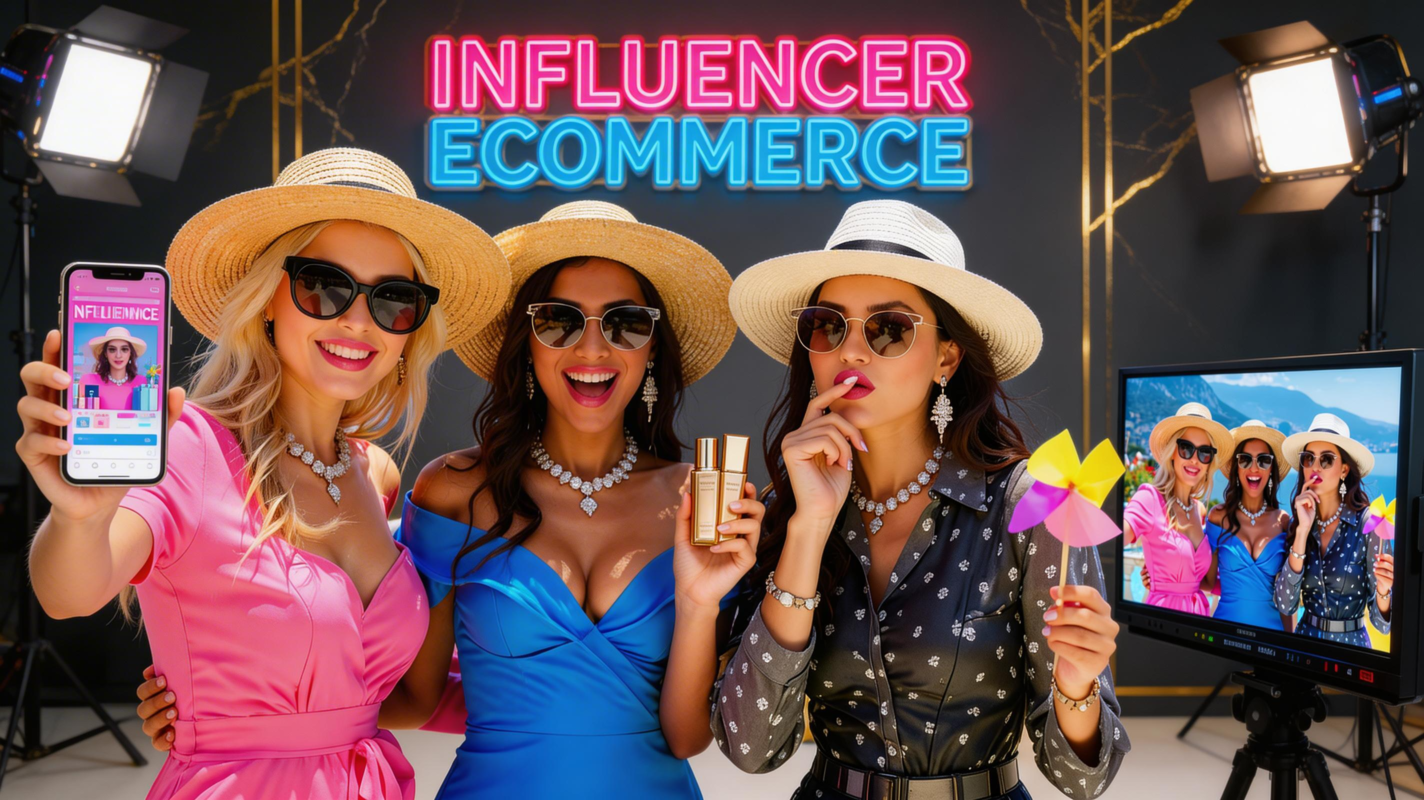
For ecommerce brands, influencer marketing is not just an awareness channel — it is a direct revenue channel. The infrastructure of modern social commerce — affiliate links, TikTok Shop, Instagram Shopping, creator-specific discount codes, and platform-native checkout — has made it possible to trace a direct line from a creator's post to a completed purchase with a degree of attribution accuracy that would have been unimaginable a decade ago.
This changes the commercial logic of influencer marketing for ecommerce entirely. Rather than asking whether influencer marketing is generating awareness, ecommerce brands can ask whether it is generating revenue — and optimise accordingly.
This guide covers how ecommerce brands should structure, execute, and measure influencer marketing programmes designed for direct sales performance.
Why Influencer Marketing Works Differently for Ecommerce
Ecommerce brands have a structural advantage in influencer marketing that product brands selling through retail do not: a direct, measurable connection between creator content and purchase. Every click, every code redemption, and every completed checkout can be attributed to a specific creator, a specific piece of content, and a specific moment in time.
This attribution capability fundamentally changes the economics of influencer marketing for ecommerce brands. Rather than evaluating campaigns purely on reach or engagement metrics — which are proxies for business outcomes — ecommerce brands can evaluate creator partnerships on revenue generated, cost per acquisition, and return on ad spend. This makes influencer marketing optimisable in real time, in a way that brand awareness campaigns are not.
The compression of the purchase journey is the second major advantage. Social commerce infrastructure — TikTok Shop, Instagram Shopping, affiliate link platforms, and direct brand affiliate programmes — has dramatically reduced the friction between content exposure and purchase. A consumer who sees a creator wearing your product can purchase it without leaving the app. This frictionless path from discovery to checkout is unique to social commerce and represents a genuine competitive advantage for ecommerce brands over traditional retail.
The Ecommerce Creator Landscape
Platform Priority for Ecommerce
TikTok is currently the most powerful platform for direct ecommerce conversion through creator content. TikTok Shop has created a native commerce infrastructure within the platform — creators can tag products directly in their videos, and viewers can purchase without leaving the app. TikTok's algorithm also provides extraordinary organic reach potential, giving ecommerce brands the ability to access large new audiences through creator content at a speed no other platform can match. For ecommerce brands targeting consumers under 40, TikTok should be the primary influencer investment.
Instagram remains highly effective for ecommerce, particularly in fashion, beauty, home, and lifestyle categories. Instagram Shopping, affiliate link infrastructure via LTK and similar platforms, and the established influencer marketing ecosystem make Instagram a mature, reliable ecommerce channel. Reels in particular drive strong discovery and conversion for product-focused content.
YouTube is most valuable for higher-consideration ecommerce purchases — electronics, furniture, software, and other products where consumers want detailed evaluation content before purchasing. YouTube product reviews and unboxing content have significant long-tail performance and continue driving traffic and revenue months after publication.
Pinterest drives meaningful referral traffic for ecommerce brands in home, fashion, and beauty categories. Creator content formatted for Pinterest — high-quality imagery, shoppable pins, step-by-step tutorials — can generate sustained organic traffic and has strong commercial intent at the point of discovery.
Creator Types for Ecommerce
Product review and haul creators whose content is built around discovering, testing, and reviewing products are the most directly aligned with ecommerce conversion goals. Their audiences are in an active discovery and evaluation mindset, their content provides genuine product assessment, and their affiliate and code infrastructure is typically well-established.
Niche lifestyle creators in categories aligned with your product category — home and interiors, sustainable living, budget lifestyle, parenting, food — deliver highly targeted audiences with strong purchase intent for relevant products. A home interiors creator recommending a specific product to 40,000 engaged followers can generate more revenue than a general lifestyle creator recommending the same product to 400,000 passive followers.
Micro-influencers at scale are the most cost-efficient model for many ecommerce brands. A programme of 50 to 100 micro-creators in relevant niches — each with 5,000 to 50,000 engaged followers — can generate more total revenue at a lower cost per acquisition than a small number of large creator partnerships. This model requires more operational management but delivers superior economics at scale.
Ecommerce Influencer Marketing Models
Affiliate and Commission
The most efficient model for ecommerce influencer marketing. Creators receive unique trackable links or discount codes and earn a commission on sales generated — typically between 10 and 20 percent of sale value. Brands pay primarily for results rather than for reach, which dramatically improves the economics of the programme at scale.
Building an affiliate programme requires investment in infrastructure — an affiliate platform, creator onboarding process, and payment system — but the return on that investment compounds over time as the creator network grows and optimises. The major affiliate platforms — LTK, ShareASale, Impact, and direct brand programmes — provide the tracking and payment infrastructure needed to run programmes at scale.
Product Seeding with Affiliate Follow-Up
Send product to a large number of creators — particularly micro and nano creators — without a formal paid arrangement. Creators who generate organic content and positive audience response are then offered affiliate arrangements to continue promoting the product on a commission basis. This model is cost-efficient at the front end and self-selects for the creators whose audiences are most responsive to your product.
Paid Partnerships with Performance Clauses
Guaranteed paid content deals that include performance-based bonus structures — for example, a base fee plus a commission on sales above a defined threshold. This model combines the content guarantee of a paid partnership with the conversion incentive of an affiliate arrangement. It is particularly effective for ecommerce brands working with mid-tier creators who have demonstrated conversion capability.
TikTok Shop Campaigns
TikTok Shop creator campaigns are a distinct model specific to the platform's native commerce infrastructure. Brands list products in the TikTok Shop and recruit creators — through the TikTok Shop affiliate programme — to feature those products in their content. Creators earn commission on sales; brands gain access to TikTok's vast creator network and its seamless in-app purchase functionality.
TikTok Shop is most effective in categories where impulse purchase behaviour is strong — beauty, fashion, food, gadgets, and home products. The combination of entertaining short-form content and frictionless checkout is extraordinarily powerful for the right product categories.
Attribution and Measurement for Ecommerce
The ability to accurately attribute revenue to creator partnerships is the defining advantage of ecommerce influencer marketing. Investing in proper attribution infrastructure from the outset is essential.
UTM Parameters
Every creator-shared URL should include UTM parameters that identify the creator, platform, campaign, and content piece. This allows clean attribution of website traffic, product page views, and completed purchases to specific creator content in your analytics platform.
Creator-Specific Discount Codes
Unique discount codes for each creator provide attribution that works across platforms and purchase journeys. Even consumers who discover a product through creator content but complete their purchase later through a different path will often use a creator's discount code — providing attribution that UTM parameters alone would miss.
Multi-Touch Attribution Modelling
Consumer purchase journeys increasingly involve multiple creator touchpoints before conversion. A consumer might discover a product through a TikTok creator, research it through a YouTube review, and convert after seeing a discount code in an Instagram creator's Stories. Last-click attribution models dramatically undercount the contribution of upper-funnel creator content. Invest in multi-touch attribution modelling to accurately capture the full contribution of your creator programme to revenue.
Creator-Level Performance Dashboards
Track performance at the individual creator level — revenue generated, cost per acquisition, affiliate commission paid, and return on investment. This data allows continuous optimisation of the creator mix, identifying which creators deliver the strongest economics and scaling investment accordingly.
Briefing Ecommerce Creators for Conversion
Ecommerce influencer briefs should be more conversion-focused than awareness-campaign briefs, without sacrificing the authenticity that makes creator content effective.
Lead with the product truth. What is genuinely good about your product? What problem does it solve? What makes it worth buying? Brief creators on the product's genuine value proposition, not marketing language. The best ecommerce creator content is an honest, enthusiastic recommendation — not a scripted advertisement.
Make the purchase path frictionless. Ensure creators know exactly where to direct their audiences — a product page, a landing page, or directly to TikTok Shop — and that the link or code they are sharing is working correctly before content goes live.
Include a clear call to action. Ecommerce creator content should include a clear, specific call to action — a discount code, a direct link, or a Shop Now instruction. Passive product mentions without clear purchase prompts generate awareness but not conversion.
Allow honest assessment. Creators whose audiences trust them are more commercially valuable than creators who only say positive things. Brief creators on what you need communicated, allow them to share their genuine reaction, and trust that honest enthusiasm converts better than scripted endorsement.
Influencer Marketing vs Paid Social for Ecommerce
A frequent strategic question for ecommerce brands is how to allocate budget between influencer marketing and paid social advertising — Facebook, Instagram, and TikTok ads.
The honest answer is that the most effective ecommerce brands use both in combination, with each serving a distinct role. Paid social provides precise audience targeting, predictable reach, and direct response mechanics. Influencer marketing provides authentic social proof, community trust, and organic content that paid social cannot replicate.
The most powerful combination is using creator content as the creative asset for paid social amplification. High-performing organic creator posts — identified through affiliate and UTM data — are boosted as paid ads, combining the authenticity of creator content with the targeting precision of paid social. This approach consistently outperforms both traditional ad creative and unpaid creator content on its own.
For more on how these channels compare, see our guide on [influencer marketing vs social media advertising].
Working with an Ecommerce Influencer Marketing Agency
At LMG Media, our ecommerce influencer marketing practice helps online brands build creator programmes that drive measurable revenue — from affiliate infrastructure and TikTok Shop campaigns to micro-influencer seeding programmes and major product launch activations across Instagram and TikTok. Get in touch to discuss building a performance-focused influencer programme for your ecommerce brand.
Summary
Ecommerce influencer marketing is the most directly measurable form of influencer marketing available — and brands that invest in the right infrastructure and creator relationships consistently generate strong, attributable returns. The key principles to carry forward:
- Build affiliate infrastructure first — it is the foundation of a measurable, scalable ecommerce creator programme
- Invest in TikTok Shop — the combination of creator content and native checkout is uniquely powerful for ecommerce conversion
- Use micro-influencers at scale for the strongest cost-per-acquisition economics
- Implement proper attribution from day one — UTM parameters, creator codes, and multi-touch modelling
- Use top-performing creator content as paid social creative for compounding return on your influencer investment
More from the desk
FULL INDEX · 54 → Industry guidesTech Influencer Marketing: How B2B and Consumer Tech Brands Work with CreatorsNO. 21 · 9 MIN
 Industry guidesTravel Influencer Marketing: How Hospitality and Tourism Brands Partner with CreatorsNO. 20 · 9 MIN
 Industry guidesFood Influencer Marketing: How Restaurants and FMCG Brands Work with Food CreatorsNO. 19 · 9 MIN
LMG MEDIA · THE DESK
NO. 17 · FILED 18 MAR 2026 · LMG.MEDIA/BLOG
LMG.MEDIA/BLOG · © 2026
© 2026 LMG MEDIA
WHERE QUALITY BRANDS MEET ICONIC INFLUENCE