
Gaming Influencer Marketing: Tap Into the Creator Economy's Fastest-Growing Segment
Learn how brands run effective gaming influencer marketing campaigns. This complete guide covers creator selection, platform strategy across Twitch, YouTube, and TikTok, sponsorship formats, pricing, and how to measure results.
LMG MEDIA TEAM
· 18 MAR 2026 · 10 MIN READ
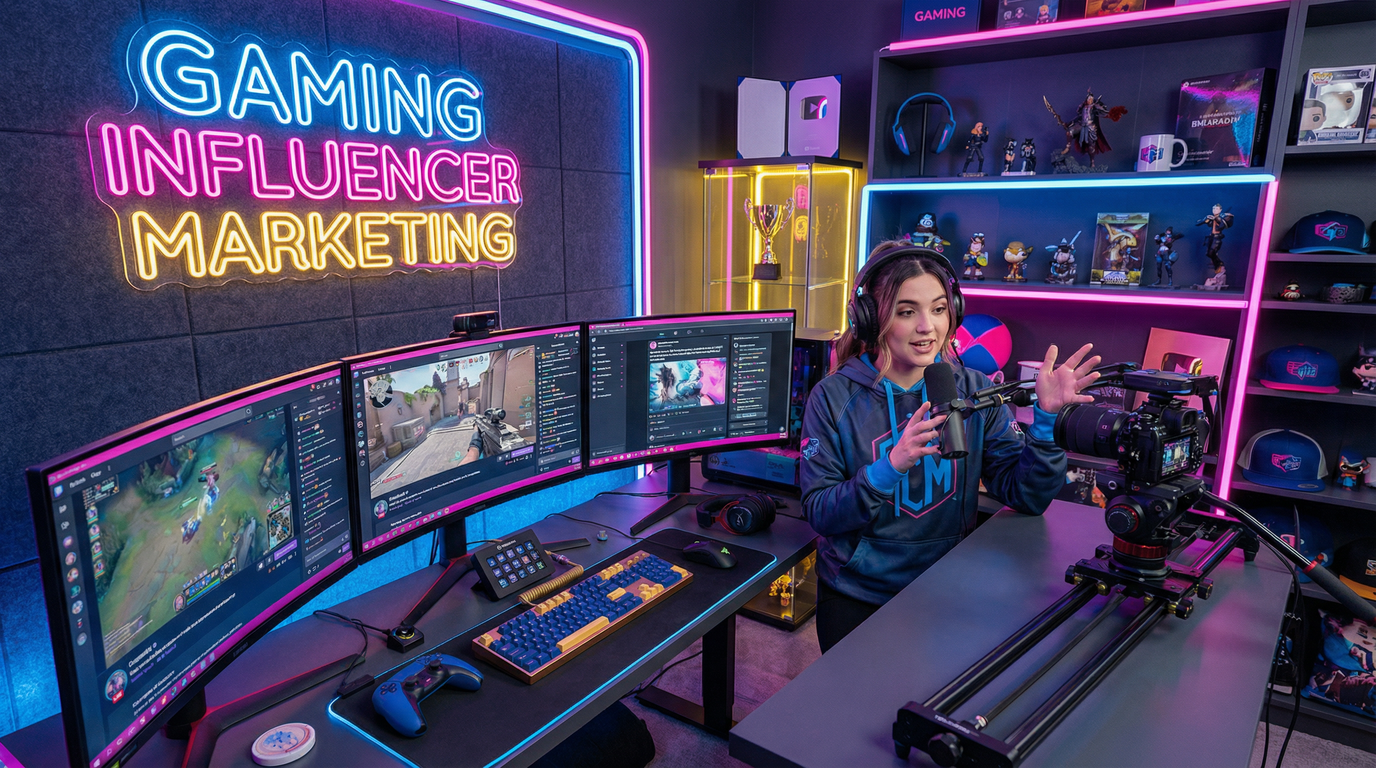
Gaming is the largest entertainment category on earth, and gaming creators are the most-watched content producers in the world. More people watch gaming content on YouTube and Twitch than watch traditional television in most age demographics under 35. The audiences are enormous, deeply engaged, and — contrary to common brand assumptions — highly diverse in terms of age, gender, and purchasing power.
Yet gaming influencer marketing remains underutilised by brands outside the gaming industry itself. The brands that have figured it out — energy drinks, fast food, financial services, consumer tech, and automotive brands among them — are accessing audience attention at a scale and engagement depth that almost no other media format can match.
This guide covers how brands across categories can build effective gaming creator partnerships — from platform strategy and creator selection to sponsorship formats, pricing, and measurement.
The Gaming Audience: What Brands Need to Understand
Before building a gaming influencer strategy, brands need to understand who gaming audiences actually are — because the reality is significantly different from the demographic assumptions many marketers bring to the category.
Gaming audiences are not exclusively young males. The gaming audience is majority male but increasingly mixed, and spans age ranges from teenagers through to adults in their 40s and 50s. Mobile gaming in particular has dramatically expanded the demographic diversity of gaming audiences. Brands targeting women aged 25–40, for example, will find substantial audiences in mobile gaming, casual gaming, and certain console communities.
Gaming audiences have significant spending power. The average gaming enthusiast spends considerably on hardware, software, subscriptions, and in-game purchases. They are also highly engaged consumers of adjacent categories — tech, food and beverage, apparel, and entertainment — making gaming creators valuable partners for brands well beyond the gaming industry.
Gaming audiences are deeply loyal to creators. The relationship between gaming audiences and their favourite creators is among the most intense in the entire creator economy. Viewers who watch a creator play games for hours every week develop a genuine parasocial relationship — they feel like they know the creator personally. This depth of relationship translates into exceptional commercial influence when the creator makes a genuine product recommendation.
Gaming audiences are highly sceptical of inauthentic advertising. The same depth of relationship that makes gaming audiences commercially valuable also makes them acutely sensitive to forced or inauthentic sponsorships. Gaming creators who promote irrelevant products or who present sponsorships in a way that feels disconnected from their content face immediate and vocal backlash from their communities. Authenticity and relevance are non-negotiable in gaming influencer marketing.
The Gaming Creator Platform Landscape
Gaming influencer marketing spans multiple platforms with distinct audiences, content formats, and commercial opportunities. An effective gaming creator strategy requires understanding how each platform works and which is most appropriate for different campaign objectives.
Twitch
Twitch is the dominant live-streaming platform for gaming content. Creators stream gameplay in real time, building communities of concurrent viewers who interact with them through live chat. Twitch audiences are highly engaged — they are actively watching and participating, not passively scrolling — and the live format creates a sense of shared experience that generates extraordinary community loyalty.
For brands, Twitch sponsorships typically take the form of sponsored streams, where the creator dedicates a streaming session or block of time to playing a sponsored game or integrating a brand into their live content. Channel sponsorships — where a brand's logo or message appears consistently on a creator's stream overlay — provide sustained brand presence across all of a creator's live content.
Twitch is most valuable for gaming brands, consumer tech, energy drinks, food delivery, and financial products targeting young adult males. It is less well-suited to brands with broad general consumer audiences, where the platform's niche skew limits reach efficiency.
YouTube Gaming
YouTube is the primary platform for recorded gaming content — walkthroughs, reviews, Let's Plays, game analyses, and commentary. YouTube gaming content has significant long-tail performance: a game review or walkthrough published months or years ago continues generating views as new players discover the game. For brands integrated into evergreen gaming content, this creates the same compounding return dynamic as other YouTube influencer partnerships.
YouTube gaming audiences skew slightly older than Twitch and are more research-oriented — they come to YouTube to learn about games before purchasing, to find walkthroughs when stuck, and to watch commentary and analysis. This research orientation makes YouTube gaming particularly valuable for brands whose products benefit from considered evaluation.
TikTok Gaming
TikTok's gaming community — #GamingTok — has grown rapidly and is now a significant discovery platform for both games and gaming-adjacent brands. TikTok gaming content tends toward short, highly entertaining clips — impressive gameplay moments, gaming humour, commentary, and trend content. The platform's algorithm gives gaming content strong organic reach potential and is particularly effective for reaching younger gaming audiences and casual gamers who may not consume content on Twitch or YouTube.
Discord
While not a content platform in the traditional sense, Discord is the community infrastructure of the gaming world. Creators with large, active Discord communities offer brands the opportunity to reach highly engaged gaming audiences through community sponsorships, exclusive brand activations, and direct community engagement. Discord partnerships are best used in combination with content platform sponsorships rather than as standalone activations.
Gaming Influencer Sponsorship Formats
Sponsored Streams
The creator dedicates a live stream or stream segment to playing a sponsored game, using a sponsored product, or delivering a brand message to their live audience. Sponsored streams are the signature format of Twitch influencer marketing and work well for game launches, consumer tech products, food delivery, and any brand that benefits from extended, relaxed brand exposure in a live context.
Game Launch Campaigns
A coordinated creator activation around a new game release — multiple creators receive early access and launch content simultaneously, creating a moment of concentrated visibility that amplifies the release. Game launch campaigns require careful coordination of embargo management, briefing, and launch timing. For non-gaming brands, the game launch format can be adapted to product launches that want to generate hype through gaming community channels.
Integration Sponsorships
A brand is referenced within a creator's regular content — a verbal mention, a logo on stream, a product placed on the creator's desk. Integration sponsorships are the most common format in gaming and allow brands to build consistent presence across a creator's content without requiring dedicated content production. The best integration sponsorships feel like a natural part of the creator's environment rather than an interruption.
Tournament and Esports Sponsorships
Sponsoring gaming tournaments — from major esports events to creator-run community tournaments — provides brand exposure to highly engaged gaming audiences. Esports sponsorship at the professional level involves significant investment; creator-run community tournaments offer a more accessible entry point with engaged, participatory audiences.
Creator Merchandise and Collaborations
Co-creating limited edition products with gaming creators — branded merchandise, custom peripherals, or exclusive in-game items — generates community excitement and deepens brand association with the creator's identity. These collaborations work best when the product is genuinely relevant to both the creator's community and the brand's category.
Creator Selection for Gaming Campaigns
Game and Genre Alignment
Gaming audiences segment strongly by game and genre. A first-person shooter community is a meaningfully different audience from a strategy gaming community, which is different again from a mobile gaming community. Creator selection should start with identifying which gaming communities contain the highest concentration of your target consumers — and then identifying the creators with the strongest standing in those specific communities.
Platform Fit
Match creator selection to the platform most relevant to your campaign. A Twitch-primary creator with 5,000 average concurrent viewers is a different proposition from a YouTube creator with 2 million subscribers — both may be valuable, but they serve different campaign objectives. Define your primary platform before selecting creators rather than selecting creators and then determining platform.
Sponsorship Track Record
Review the creator's history of brand partnerships. Do their sponsored segments perform comparably to organic content? Does the creator present sponsorships in a way that feels natural to their content, or do they clearly switch into advertising mode? Creators who integrate sponsorships well maintain their audience's trust and deliver significantly better commercial results.
Community Health
A creator's community culture matters considerably in gaming, where community toxicity is a genuine brand safety risk. Review the creator's chat behaviour, moderation practices, and community guidelines. A creator who maintains a respectful, inclusive community is a safer brand partner than one whose audience culture is predominantly hostile or exclusionary.
Gaming Influencer Marketing Pricing
Gaming influencer rates vary significantly by platform, audience size, and engagement level.
YouTube Gaming:
- Micro creators (10K–100K subscribers): £500–£3,000 per video
- Mid-tier creators (100K–500K subscribers): £3,000–£12,000 per video
- Large creators (500K–2M subscribers): £12,000–£40,000 per video
- Mega creators (2M+ subscribers): £40,000–£200,000+ per video
Twitch:
- Small streamers (500–5K avg. concurrent viewers): £500–£3,000 per stream
- Mid-tier streamers (5K–20K avg. concurrent viewers): £3,000–£15,000 per stream
- Large streamers (20K+ avg. concurrent viewers): £15,000–£75,000+ per stream
For a comprehensive pricing breakdown, see our guide on [how much does influencer marketing cost].
Measuring Gaming Influencer Campaign Performance
Concurrent viewership and peak viewers for Twitch sponsorships. These are the primary reach metrics for live content and are available directly from Twitch analytics.
Video views and watch time for YouTube gaming content. As with other YouTube sponsorships, track performance not just at launch but over the following three to six months to capture long-tail value.
Promo code redemptions and link clicks. Gaming audiences are highly responsive to creator discount codes — particularly for digital products, subscriptions, and tech purchases. Creator-specific codes provide clean conversion attribution.
Chat engagement and sentiment for Twitch streams. Live chat volume, sentiment, and brand mention frequency during sponsored segments indicate how the audience is responding to the brand's presence in real time.
Community discussion on Discord, Reddit, and social media. Gaming communities actively discuss sponsorships and brand partnerships online. Monitoring community sentiment and brand mentions across gaming community platforms provides qualitative insight into campaign reception that platform analytics do not capture.
Working with a Gaming Influencer Marketing Agency
At LMG Media, our gaming influencer marketing practice connects brands across categories with the gaming creators whose communities are most aligned with their target audiences. We manage campaigns across Twitch, YouTube, and TikTok, from individual creator partnerships to coordinated game launch activations. Get in touch to discuss how gaming influencer marketing could work for your brand.
Summary
Gaming influencer marketing offers brands access to some of the most engaged, loyal, and commercially active audiences in the creator economy — across demographics that are broader and more diverse than most marketers assume. The key principles to carry forward:
- Understand the platform landscape — Twitch, YouTube, and TikTok serve different gaming audiences and require different campaign approaches
- Prioritise authenticity and relevance — gaming audiences are more sensitive to inauthentic sponsorships than almost any other creator community
- Select creators by game genre and community fit, not just follower count
- Leverage promo codes and trackable links — gaming audiences convert through affiliate-style mechanics reliably
- Monitor community sentiment alongside platform analytics — the gaming community's reaction to your brand's presence is as important as the reach numbers
More from the desk
FULL INDEX · 54 → Industry guidesTech Influencer Marketing: How B2B and Consumer Tech Brands Work with CreatorsNO. 21 · 9 MIN
 Industry guidesTravel Influencer Marketing: How Hospitality and Tourism Brands Partner with CreatorsNO. 20 · 9 MIN
 Industry guidesFood Influencer Marketing: How Restaurants and FMCG Brands Work with Food CreatorsNO. 19 · 9 MIN
LMG MEDIA · THE DESK
NO. 16 · FILED 18 MAR 2026 · LMG.MEDIA/BLOG
LMG.MEDIA/BLOG · © 2026
© 2026 LMG MEDIA
WHERE QUALITY BRANDS MEET ICONIC INFLUENCE