
How to Build a Winning Instagram Influencer Marketing Strategy in 2026
Building an effective Instagram influencer marketing strategy has become essential for brands seeking authentic connections with their target audiences in 2026. While traditional advertising continues to face declining trust and engagement, influencer partnerships deliver an average return of $5.78 for every dollar spent, with top-performing campaigns achieving returns exceeding $10 per dollar invested. The key to unlocking these results lies not in simply paying influencers to post about your products, but in developing a comprehensive strategy that aligns influencer partnerships with your broader business objectives while maintaining authenticity and measurable accountability.
LMG MEDIA TEAM
· 28 NOV 2025 · 24 MIN READ
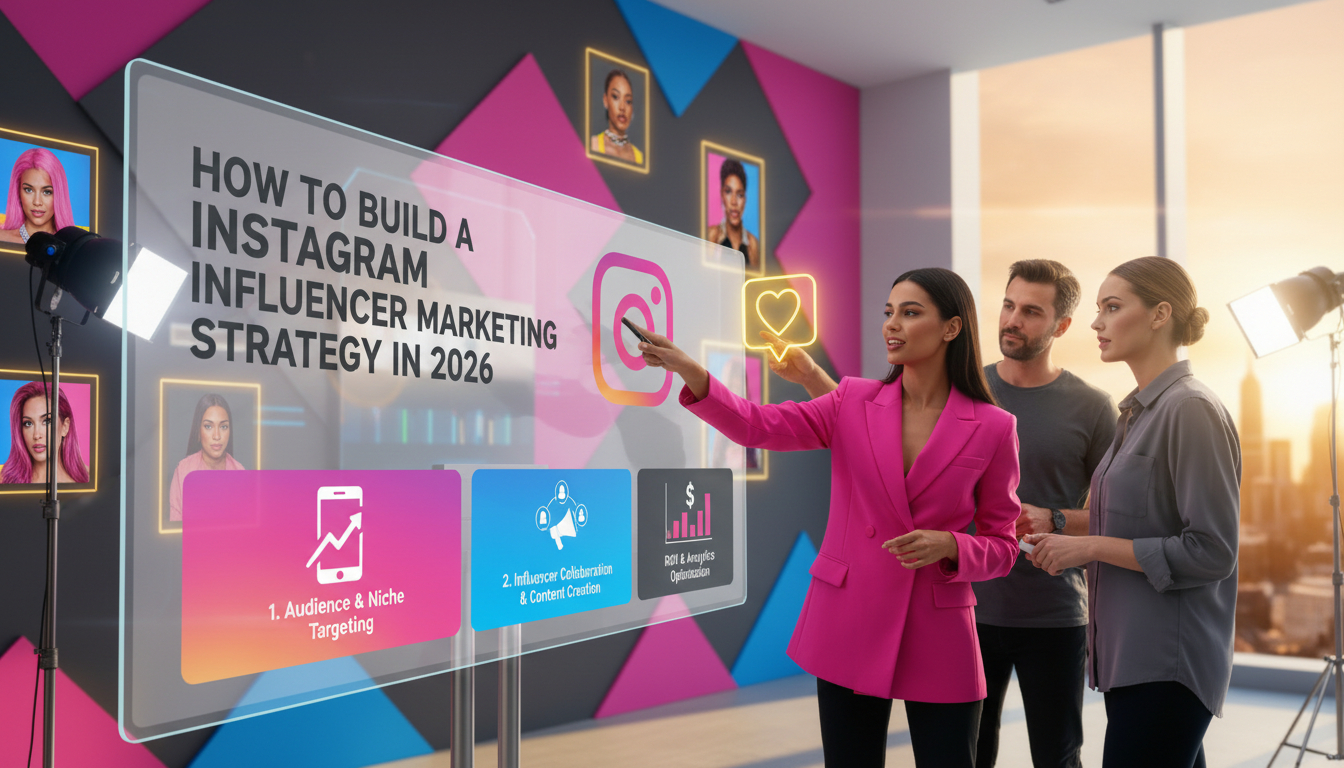
The influencer marketing landscape has matured significantly over the past few years. Gone are the days when brands could achieve success by simply sending products to anyone with a large following. Today's consumers are sophisticated enough to distinguish between genuine recommendations and paid promotions that lack authenticity. They scroll past obvious advertisements but stop to engage with content that feels real, relatable, and valuable. This shift has forced brands to become more strategic in their approach, focusing on long-term relationships with carefully selected creators rather than one-off transactional partnerships.
Understanding the Foundation of Influencer Strategy
Before reaching out to a single influencer or allocating any budget, successful brands invest time in building a solid strategic foundation. This foundation begins with a clear understanding of what you're trying to achieve through influencer partnerships. Are you launching a new product and need to build awareness quickly? Are you trying to reposition your brand to appeal to a younger demographic? Do you need to drive immediate sales to meet quarterly targets? Each of these objectives requires a different approach to influencer marketing, from the types of creators you partner with to the content formats you prioritize and the metrics you use to measure success.
Consider the difference between a brand awareness campaign and a direct response campaign. When building awareness, you might partner with macro-influencers who can reach hundreds of thousands of people quickly, even if their engagement rates are lower. The goal is exposure and getting your brand name in front of as many relevant eyeballs as possible. You'll measure success through reach, impressions, brand mention volume, and increases in branded search traffic. The content itself might be more lifestyle-focused, showing your product integrated into aspirational scenarios that help audiences understand what your brand represents.
Contrast this with a direct response campaign focused on driving sales. Here, you'll likely achieve better results with micro-influencers who have smaller but highly engaged audiences. These creators might reach only 20,000 people instead of 200,000, but if 5% of their audience actually makes a purchase compared to 0.5% of a macro-influencer's audience, the micro-influencer delivers ten times better results despite the smaller reach. Your content will include clear calls-to-action, unique discount codes for tracking, and specific product benefits rather than vague lifestyle association. You'll measure success through click-through rates, conversion rates, cost per acquisition, and return on ad spend.
The most sophisticated brands recognize that they need both approaches working in tandem. Awareness campaigns at the top of the funnel introduce your brand to new audiences, while conversion-focused campaigns at the bottom of the funnel capitalize on that awareness by converting interested prospects into customers. Your influencer strategy should map to your entire customer journey, with different types of influencers playing different roles at each stage.
Identifying and Understanding Your Target Audience
The single biggest mistake brands make in influencer marketing is selecting creators based on who they like personally or who has the most impressive follower count, rather than who actually reaches their target customers. An influencer might be incredibly talented, aesthetically on-brand, and even personally passionate about your products, but if their audience doesn't match your ideal customer profile, the partnership will underperform no matter how beautiful the content or how enthusiastic the endorsement.
Deep audience research begins with understanding your existing customers. Pull data from your CRM, e-commerce platform, and analytics tools to build detailed profiles of who actually buys from you. What age ranges dominate your customer base? What's the gender split? Where do they live geographically? What's their approximate income level? What other brands do they purchase from? What media do they consume? What problems are they trying to solve with your products? The more specific you can be, the better equipped you'll be to find influencers whose audiences match these characteristics.
But demographics alone tell an incomplete story. Two women in their thirties living in major cities might look identical demographically, but one might be a minimalist who values sustainability and shops primarily at secondhand stores, while the other prioritizes luxury and status and regularly purchases designer items. These psychographic differences matter tremendously when selecting influencers. The minimalist will engage with creators who share capsule wardrobe tips and discuss ethical fashion, while the luxury shopper follows influencers who showcase the latest designer releases and attend fashion week events. Partnering with the wrong type of creator, even if demographics align perfectly, results in wasted budget and poor performance.
Once you understand your target audience deeply, you can begin identifying influencers who genuinely connect with that same audience. This goes beyond looking at an influencer's follower demographics in their media kit. You need to read their comments, analyze what topics generate the most engagement, understand what values they espouse, and evaluate whether their audience genuinely trusts their recommendations. An influencer might have 100,000 followers in your target demographic, but if those followers see them as entertainment rather than a trusted advisor, their recommendations won't drive action.
The Four-Tier Influencer Framework
The influencer landscape operates on a spectrum from nano-creators with fewer than 10,000 followers to mega-celebrities with millions. Each tier offers distinct advantages and disadvantages, and the most effective strategies typically involve partnering across multiple tiers rather than concentrating all resources in one category.
Nano-influencers represent the most grassroots level of influence. These creators have fewer than 10,000 followers but often know many of them personally or interact with them regularly. They're your neighbor who happens to love fitness and shares workout tips, or the local food blogger who reviews every new restaurant in your city. Their engagement rates are the highest across any tier, frequently exceeding 8% because their audiences genuinely care about their opinions. For brands, nano-influencers offer an affordable entry point into influencer marketing, with many accepting product-only compensation or charging $10 to $100 per post. They're particularly valuable for local businesses, highly targeted niche products, or brands looking to test messaging before investing in larger partnerships.
The challenge with nano-influencers is scale. To achieve meaningful reach, you need to partner with many of them simultaneously, which creates logistical complexity. Managing 30 nano-influencers requires significantly more time than managing three macro-influencers, even though the budget might be similar. You'll spend more time on relationship management, contract negotiation, product fulfillment, and content approval. However, for brands willing to invest that time or work with an agency to manage the complexity, nano-influencer campaigns often deliver the highest return on investment through their combination of high engagement, low cost, and authentic advocacy.
Micro-influencers occupy the sweet spot for most brand partnerships. With followings between 10,000 and 100,000, they've built substantial audiences while maintaining authentic relationships and strong engagement rates averaging 3% to 6%. These creators treat content creation professionally, delivering consistent quality and reliability, but haven't yet achieved the celebrity status that creates distance between them and their followers. Their audiences still view them as peers and trusted advisors rather than distant celebrities. Pricing is reasonable, typically ranging from $200 to $2,000 per post depending on follower count and engagement, making them accessible to small and medium-sized businesses while delivering meaningful reach.
Micro-influencers also tend to be highly specialized. While a mega-celebrity might appeal broadly across many demographics and interests, a micro-influencer typically built their audience around a specific niche. This specialization provides tremendous value to brands. If you sell sustainable skincare, a micro-influencer focused specifically on clean beauty and eco-friendly products will deliver far better results than a general lifestyle influencer with ten times the followers, because every single person in that smaller audience has self-selected as interested in exactly the category you're selling to.
Macro-influencers bring scale and credibility. With followings between 100,000 and one million, these creators have typically made content creation their full-time profession and often work with management or agents. Their content quality is consistently high, they understand brand partnerships deeply, and they can move the needle on awareness quickly. However, engagement rates drop to 1.5% to 3%, and costs rise substantially to $2,000 to $10,000+ per post. They're best suited for brands with larger budgets who need to reach massive audiences quickly or who benefit from the prestige and credibility that comes with being associated with a well-known creator.
Mega-influencers and celebrities occupy the top tier with over one million followers. Partnering with them costs five to six figures per post and delivers massive reach but lower engagement rates around 1% to 2%. These partnerships are primarily about awareness, credibility, and prestige rather than direct response. A celebrity endorsement signals that your brand has arrived, which can be valuable for new brands trying to break through crowded markets or established brands looking to maintain relevance with new generations. However, the return on investment typically comes through indirect benefits like press coverage, retailer interest, and general brand elevation rather than directly measurable sales.
The most sophisticated strategies involve portfolio diversification across tiers. You might allocate 50% of your budget to micro-influencers who drive consistent engagement and conversion, 30% to a few macro-influencers who boost awareness and credibility, and 20% to a large pool of nano-influencers who provide grassroots advocacy and user-generated content. This approach balances reach, engagement, credibility, and cost-efficiency while reducing risk. If one tier underperforms, others can compensate.
Setting Clear Objectives and Key Performance Indicators
Influencer marketing fails most often not because of poor execution but because brands never clearly defined what success looks like. Without specific, measurable objectives established before launching campaigns, you have no way to evaluate performance, optimize tactics, or justify continued investment. Vague goals like "increase awareness" or "get more engagement" provide no actionable guidance and no accountability.
Effective influencer marketing objectives follow the SMART framework: Specific, Measurable, Achievable, Relevant, and Time-bound. Instead of "increase awareness," a SMART objective might be "generate 500,000 impressions and 20,000 engagements through influencer content, reaching 100,000 unique accounts, and increasing branded search volume by 30% within the next 60 days." This objective provides clear targets that can be tracked, benchmarked against industry standards to ensure they're realistic, directly supports business goals, and includes a specific timeline for evaluation.
Your objectives should cascade from your business goals. If your company's priority this quarter is launching a new product line, your influencer marketing objectives might focus on generating awareness and education about the new products among your target audience. You might measure success through reach metrics, engagement with educational content, traffic to new product pages, and initial sales velocity. If instead your priority is increasing customer lifetime value by encouraging repeat purchases, your influencer strategy might focus on showcasing multiple ways to use your existing products, driving engagement with loyalty program content, or highlighting subscription options. The metrics you track would shift accordingly to repeat purchase rates, subscription signups, and cross-sell success.
Different types of influencer campaigns require different KPIs. Awareness campaigns should be measured primarily through reach metrics, impressions, follower growth, brand mention volume, and increases in branded search. These metrics tell you how many people you're getting your brand in front of and whether they're sufficiently intrigued to seek out more information. Engagement campaigns focus on likes, comments, saves, shares, and the quality of audience interaction with content. These metrics indicate whether your messaging resonates and whether influencer audiences find the content valuable. Conversion campaigns center on click-through rates, website traffic, promo code redemptions, cost per acquisition, return on ad spend, and ultimately revenue generated.
The mistake many brands make is judging all campaigns by the same metrics. An awareness campaign partnering with macro-influencers might generate tremendous reach and impressive engagement but relatively few immediate sales. Judging this campaign solely on direct revenue would miss its actual impact on brand building and future customer acquisition. Conversely, a conversion-focused campaign with micro-influencers might generate limited reach but excellent cost per acquisition. Celebrating the reach numbers would miss the point that the campaign succeeded specifically because it prioritized quality over quantity.
Benchmarking your performance against industry standards helps set realistic expectations. For micro-influencer campaigns, engagement rates of 3% to 6% are standard, so targeting 10% without having proven tactics to justify that ambition sets you up for disappointment. Similarly, if your product costs $200 and typical Instagram influencer campaigns achieve 2% conversion rates, expecting 10% conversion without fundamental advantages in pricing, product quality, or offer structure is unrealistic. Starting with industry benchmarks and then iteratively improving as you learn what works for your specific brand and audience is a more sustainable approach than setting arbitrary goals disconnected from reality.
Building a Strategic Content Calendar
Successful influencer campaigns aren't random. They're carefully orchestrated over weeks or months, with multiple touchpoints strategically timed to maximize impact. A single influencer post, no matter how perfect, rarely generates sustained results. The marketing rule of seven suggests that consumers need to encounter a brand message at least seven times before taking action. While that specific number might vary, the principle holds: repeated exposure from trusted sources over time drives better results than one-off posts, no matter how much reach they generate.
Your content calendar should map the customer journey from awareness through consideration to purchase. During the awareness phase early in the campaign, influencers might post teaser content that introduces your brand without hard-selling. They're planting seeds, making audiences familiar with your name and curious about what you offer. This might look like an influencer mentioning in a Story that they're excited about a new product they're testing, or casually featuring your product in the background of lifestyle content. The goal is establishing recognition and interest, not driving immediate conversion.
As the campaign progresses into the consideration phase, influencers provide deeper education about your products. They might post detailed reviews, comparison content, or tutorials showing how to use your products effectively. This content addresses questions, handles objections, and helps audiences understand whether your products fit their needs. An influencer might create a carousel post walking through their entire experience with your product over 30 days, showing both progress and addressing any challenges they encountered. This type of content builds trust because it feels thorough and honest rather than superficial and promotional.
The conversion phase brings urgency and clear calls-to-action. Influencers share their final recommendations, emphasize limited-time discounts, and make it easy for audiences to purchase. They might post Reels summarizing why they recommend your product, with prominent display of their unique discount code and clear instructions on where to buy. They follow up with Stories reminding followers that the discount expires soon. This concentrated push capitalizes on the awareness and consideration built earlier, converting warm prospects who have been following along into actual customers.
Timing matters tremendously. Launching all your influencer content on the same day might create a brief spike in attention, but it also means that anyone who misses that day misses your entire campaign. Staggering content over several weeks provides multiple opportunities for discovery, allows audiences to see consistent presence rather than a one-day blitz, and enables you to adapt tactics based on early results. If certain messages or content formats perform particularly well in week one, you can emphasize those approaches more heavily in weeks two and three.
Seasonal alignment amplifies campaign impact. Launching a fitness campaign in January capitalizes on New Year's resolution energy when audiences are actively seeking workout solutions. Promoting summer fashion in May gives audiences time to purchase before vacation season begins. Holiday campaigns need to start in early November to influence Black Friday shopping and gift purchases. Understanding your product's natural purchase cycles and aligning influencer content accordingly ensures you're providing relevant information when audiences are most receptive.
Budgeting and Resource Allocation
Determining how much to invest in influencer marketing requires balancing ambition with reality. While influencer marketing often delivers strong ROI, it still requires meaningful investment to generate measurable impact. Attempting to run a comprehensive campaign on an insufficient budget typically results in partnering with too few influencers, compromising on creator quality, or cutting corners on execution in ways that undermine results.
Industry benchmarks suggest allocating 10% to 25% of your overall marketing budget to influencer partnerships, depending on your target audience and product category. Brands targeting millennials and Gen Z consumers who spend significant time on social media and trust influencer recommendations should allocate toward the higher end of that range. Brands targeting older demographics less influenced by social media might start at the lower end while testing effectiveness. B2C brands typically invest more heavily than B2B brands, though B2B influencer marketing is growing as thought leaders and industry experts build influential platforms.
Within your influencer budget, smart allocation across different areas maximizes impact. The largest portion, typically 60% to 70%, goes to direct influencer payments for content creation and posting. This includes fees for posts, Stories, and Reels, as well as any performance bonuses or commission structures you've negotiated. Another 10% to 15% covers product costs for seeding influencers with samples or full-sized products to review. While some nano-influencers accept product-only compensation, most micro and macro-influencers require both monetary payment and products.
Tools and technology deserve 10% to 15% of your budget. Whether you're using influencer discovery platforms to find potential partners, analytics tools to track performance, or contract management systems to streamline agreements, these investments in infrastructure make your program more efficient and effective. Trying to manage everything manually through spreadsheets and email might seem frugal initially, but the time costs and increased error rates ultimately cost more than investing in proper tools.
Reserve 5% to 10% for testing and contingencies. Not every partnership will succeed, not every tactic will work as expected, and opportunities will arise mid-campaign that you'll want to capitalize on. Having flexibility in your budget to pursue a trending moment, respond to competitor actions, or test a new content format without having to reallocate from committed spend gives your program agility.
The temptation to spread budget too thinly across many small partnerships or to concentrate everything with one expensive celebrity usually leads to disappointing results. Spreading $5,000 across 50 nano-influencers at $100 each creates an overwhelming management burden and makes it impossible to build relationships or ensure quality. Conversely, spending that entire $5,000 on a single macro-influencer post puts all your eggs in one basket with no diversification or testing opportunities. The balanced approach might involve working with 10 to 15 micro-influencers at $300 to $500 each, allowing meaningful relationships, manageable coordination, and enough data points to identify what works.
From Transactions to Relationships
The most successful influencer marketers recognize that their best-performing partnerships aren't transactional arrangements but genuine relationships built over time. While one-off campaigns have their place, brands that invest in long-term ambassador programs with select creators consistently outperform those that treat each partnership as an isolated transaction.
Long-term relationships deliver multiple advantages. First, they're more cost-effective. When you commit to working with an influencer for six to twelve months with regular content, you can typically negotiate a 20% to 30% discount compared to equivalent one-off post pricing. The influencer benefits from predictable income and you benefit from lower costs and extended exposure. Second, authenticity increases over time. When an influencer genuinely uses your products regularly over months, their content naturally becomes more nuanced, detailed, and believable. They discover tips and tricks through actual experience, encounter and solve real problems, and can speak to long-term results rather than just first impressions. Their audience notices the continued relationship and perceives it as genuine advocacy rather than a brief paid promotion.
Third, performance improves through iteration. In a one-off partnership, you get one attempt to get everything right. You might discover after the content posts that a different message or format would have performed better, but it's too late to adjust. In an ongoing relationship, you learn from each piece of content what resonates with that influencer's audience specifically. You can test different approaches, refine messaging, and continuously optimize. The fifth piece of content an influencer creates for you will almost always outperform the first because both you and the influencer have learned what works.
Building these relationships requires investing beyond just payments. Successful brands treat their ambassador influencers as true partners, involving them in product development by soliciting their feedback, giving them early access to new launches before the general public, featuring them in brand storytelling beyond just their own channels, and creating opportunities for them to network with other influencers and industry insiders. When influencers feel valued as creative partners rather than hired vendors, they reciprocate with higher quality work, more frequent organic mentions, and genuine advocacy that extends beyond contractual obligations.
The selection of long-term ambassadors should be extremely deliberate. These aren't just influencers who performed well once, but creators whose values align deeply with your brand, whose audiences match your target customer almost perfectly, who demonstrate professionalism and reliability, and who genuinely love your products. You're making a significant commitment, so taking time to ensure excellent fit is worth any delay. Many brands start with three-month trial periods with multiple influencers, then extend to six or twelve months with the top performers who demonstrated both results and strong working relationships.
Measuring Performance and Optimizing Continuously
The influencer marketing programs that deliver the strongest results over time share one characteristic: they measure everything, learn from the data, and continuously optimize. Too many brands launch campaigns, wait for them to finish, look at high-level metrics, declare success or failure, and move on without extracting the valuable lessons hiding in their data.
Comprehensive measurement begins with tracking the right metrics for your specific objectives, as discussed earlier, but extends beyond just collecting numbers. You need to analyze patterns across multiple dimensions to understand what's actually driving results. Which specific influencers drove the highest engagement? Was it because of their follower count, their engagement rate, their content quality, their audience demographics, or something else entirely? Which content formats performed best? Did carousel posts generate more saves than single images? Did Reels reach more people than feed posts? Did long-form video drive better conversion than short clips?
The answers to these questions inform every future decision. If you discover that micro-influencers in the 20,000 to 40,000 follower range consistently outperform those with 60,000 to 80,000 followers when accounting for cost, you should shift more budget toward that sweet spot. If product demonstration Reels drive three times more website clicks than lifestyle photo posts, you should create briefs that emphasize demonstration content. If influencer audiences in Chicago and Seattle convert at twice the rate of other cities, you should prioritize finding more local influencers in those markets.
Beyond quantitative analysis, qualitative insights matter tremendously. Read comments on influencer posts to understand what questions people are asking, what objections they're raising, and what benefits resonate most strongly. This feedback should inform your product development, your website content, your FAQs, and your messaging in future campaigns. If multiple influencer posts generate comments asking about sizing, your product pages probably need more detailed size information. If people consistently ask whether your product is vegan or cruelty-free, that should be prominently featured in all marketing materials, not buried in small print.
Competitive analysis provides additional context for your performance. What influencer strategies are your competitors using? Which creators are they partnering with? What content formats and messages are they emphasizing? You're not looking to copy their approach blindly, but understanding the competitive landscape helps you identify opportunities they're missing and threats you need to counter. If a competitor just launched a major campaign with macro-influencers in your category, you might respond by doubling down on micro-influencer partnerships where you can dominate through volume and authenticity rather than trying to match their spend with macro-influencers.
Testing should be systematic and ongoing, not occasional. Each campaign should include deliberate tests of new tactics alongside proven approaches. You might test two different call-to-action strategies by having half your influencers emphasize "link in bio" while the other half emphasize discount codes. You can test different product positioning by having some influencers focus on sustainability benefits while others emphasize performance benefits. You can test seasonal timing by running small campaigns in different months to identify when your audience is most receptive. Each test generates insights that make your overall program stronger.
The most sophisticated brands implement quarterly review cycles where they aggregate data from all campaigns that period, identify top performers and underperformers, conduct deep-dive analyses to understand why certain approaches succeeded or failed, and adjust their strategy accordingly for the next quarter. This regular rhythm of analysis and adjustment prevents the Instagram influencer marketing campaign from becoming stagnant and ensures continuous improvement over time.
Frequently Asked Questions
When brands begin building influencer marketing strategies, certain questions arise repeatedly. Understanding these common concerns helps avoid pitfalls and set appropriate expectations from the start.
The question of how many influencers to partner with has no universal answer, but depends entirely on budget, objectives, and resources. Starting with three to five influencer partnerships allows you to test different audience types and approaches while keeping coordination manageable. As you prove ROI and understand what works, scaling to 10 to 20 active partnerships in a given campaign provides diversification and meaningful reach. Beyond that, you likely need dedicated staff or agency support to maintain quality relationships and coordination. A general rule is that one person can effectively manage personal relationships with 15 to 20 influencers simultaneously, though this varies based on campaign complexity and influencer needs.
The choice between nano, micro, or macro influencers should be driven by your objectives and budget, not by arbitrary preferences. Most brands achieve optimal results by combining tiers strategically. Micro-influencers typically deliver the best balance of reach, engagement, and cost for the majority of campaigns, which is why allocating 50% to 70% of budget to this tier makes sense for many brands. Supplement with nano-influencers for grassroots advocacy and volume, and selectively use macro-influencers when you need broader reach or credibility boost. Testing across tiers with small budgets initially helps you identify what mix works best for your specific situation before committing larger investments.
Realistic timelines for seeing results depend on what you're measuring. Immediate metrics like reach and engagement appear within 24 to 48 hours of content posting, giving you quick feedback on content resonance. Website traffic and initial conversions materialize within one to two weeks as interested audiences click through and explore. However, meaningful brand awareness shifts and sustained sales impact require three to six months of consistent influencer activity. One campaign rarely transforms a business, but ongoing programs that maintain presence in target audiences' feeds over extended periods compound results significantly. First campaigns often break even or lose money as you learn what works, with profitability and strong ROI emerging in campaigns two and three once you've optimized based on initial learnings.
Convincing leadership to invest in influencer marketing becomes easier when you start with a small pilot campaign using 10% to 15% of digital marketing budget. Track absolutely everything meticulously, comparing cost per acquisition, engagement rates, and customer lifetime value against other channels like paid search and display advertising. Present results showing concrete ROI, not just vanity metrics like impressions or followers. Include competitor analysis demonstrating successful programs in your industry. Most importantly, tell the story of why influencer marketing works for your target audience specifically, connecting it to their media consumption habits and trust patterns rather than just presenting it as a trendy tactic. CFOs respond to financial projections and competitive positioning more than creative ideas, so frame your proposal accordingly.
The question of whether to build an in-house influencer marketing function or partner with an agency deserves careful consideration. In-house teams provide deeper brand knowledge, more agility to respond quickly to opportunities, and direct relationships with influencers that can become valuable long-term assets. However, they require significant investment in hiring specialized talent, purchasing tools and technology, and building processes from scratch. Agencies bring established relationships with influencers, proven playbooks and best practices, specialized tools already in place, and the ability to scale up or down flexibly based on needs. They're often more cost-effective for brands spending under $50,000 annually on influencer marketing, while in-house becomes advantageous above $100,000 to $150,000 annual spend. A hybrid approach where you have one or two in-house people managing strategy and key relationships while outsourcing discovery, vetting, and campaign execution to an agency often provides the best of both worlds, particularly for mid-size brands.
Building a winning Instagram influencer marketing strategy requires more work than simply sending products to people with large followings, but the results justify the investment. Brands that approach influencer marketing strategically, with clear objectives, careful creator selection, authentic long-term relationships, and rigorous performance tracking consistently achieve returns that dwarf traditional advertising. As consumers increasingly tune out conventional ads and turn to trusted creators for recommendations, influencer marketing will only grow in importance. Starting now with a solid strategic foundation positions your brand to capitalize on this shift and build lasting competitive advantage through authentic community connections.
More from the desk
FULL INDEX · 54 →

LMG MEDIA · THE DESK
NO. 24 · FILED 28 NOV 2025 · LMG.MEDIA/BLOG
LMG.MEDIA/BLOG · © 2026
© 2026 LMG MEDIA
WHERE QUALITY BRANDS MEET ICONIC INFLUENCE