
LinkedIn Influencer Marketing: The Complete B2B Brand Playbook
Discover how to run effective LinkedIn influencer marketing campaigns. This complete B2B brand guide covers thought leader partnerships, content formats, creator selection, pricing, and how to measure results from LinkedIn creator activations.
LMG MEDIA TEAM
· 18 MAR 2026 · 12 MIN READ
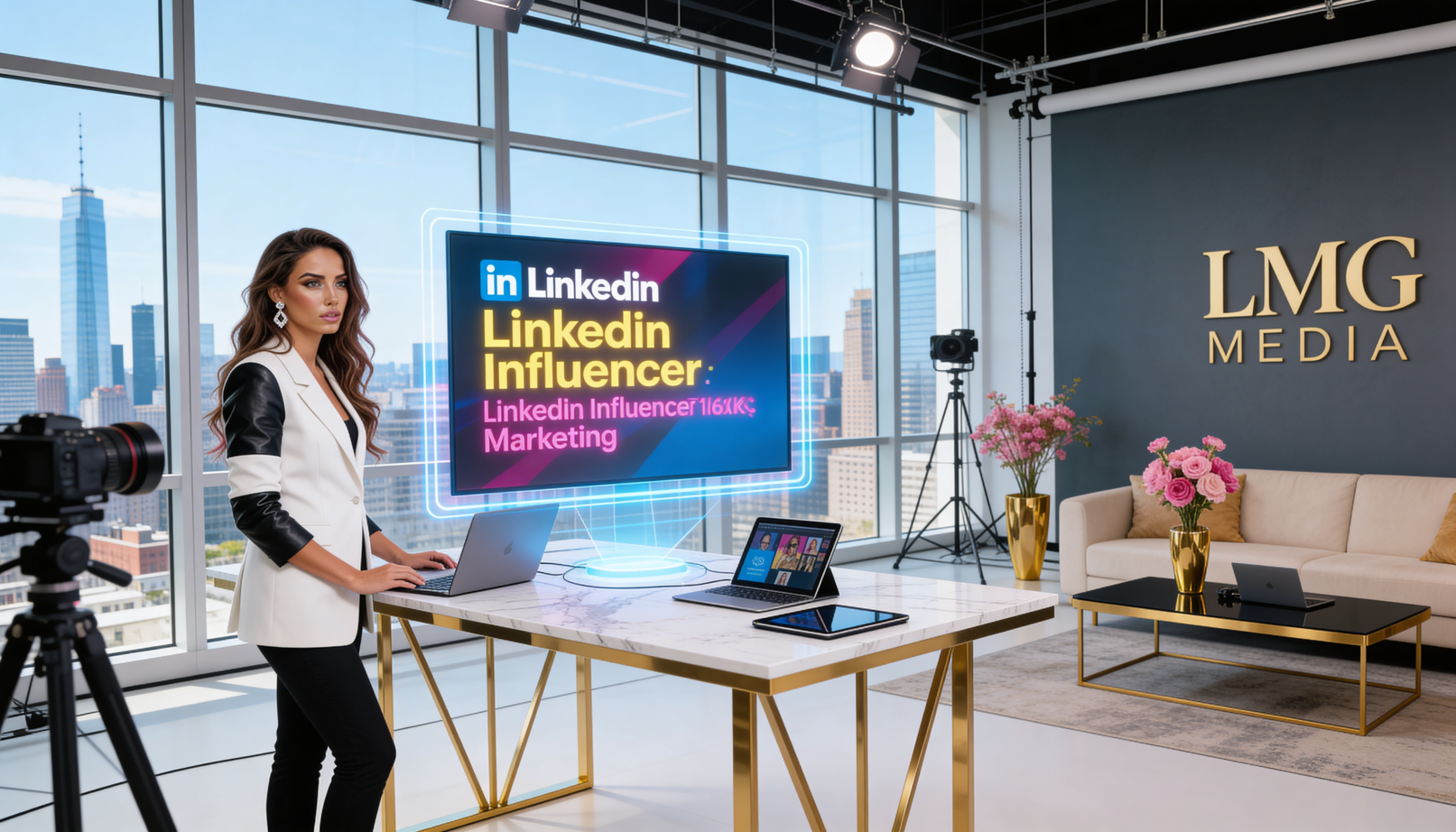
Why LinkedIn Influencer Marketing Is Different
LinkedIn is not simply another social platform with a different demographic. It is a fundamentally different media environment, and the brands that treat it as such consistently outperform those that simply repurpose their Instagram or TikTok playbook.
The audience is in a professional mindset. LinkedIn users are logged in as decision-makers, practitioners, and professionals — not as consumers relaxing on a sofa. A VP of Marketing reading a post about brand strategy is in exactly the right frame of mind to engage with a relevant brand message. That context has significant implications for both the type of content that works and the conversion outcomes brands can expect.
Trust is built on expertise, not aesthetics. On Instagram, audience trust is often tied to a creator's visual world — their aesthetic, their lifestyle, their relatability. On LinkedIn, trust is earned through demonstrated expertise, professional credibility, and the quality of ideas. The most effective LinkedIn influencers are not the most attractive or the most entertaining — they are the most insightful.
The organic reach mechanics are different. LinkedIn's algorithm actively rewards content that generates meaningful engagement — substantive comments, shares, and saves — over passive consumption. A post that sparks a genuine professional debate can reach hundreds of thousands of professionals organically, far beyond the creator's immediate network.
The sales cycle is long and LinkedIn fits it. B2B purchase decisions often involve multiple stakeholders, long evaluation periods, and significant contract values. LinkedIn influencer content works by building familiarity and credibility over time — exactly what is needed to influence a decision that will not be made for weeks or months.
The LinkedIn Influencer Landscape
LinkedIn influencer marketing does not map neatly onto the follower-tier structure used on other platforms. Reach on LinkedIn is determined as much by content quality and engagement rates as by connection count, and a creator with 15,000 highly engaged followers in a specific industry vertical can consistently outperform a creator with 150,000 passive connections.
Types of LinkedIn Influencers
Industry thought leaders. Senior practitioners, executives, and specialists with established authority in a specific field — marketing, finance, technology, HR, legal, or another professional vertical. Their content typically takes the form of opinions, frameworks, analysis, and lessons from experience. These creators command the highest trust and conversion rates for B2B brands.
Founders and entrepreneurs. Startup founders and business owners who document their journey, share operational learnings, and build in public. Highly effective for brands targeting the SME and startup market. Their audiences tend to skew towards other founders, early-stage teams, and investors.
Career educators and coaches. Creators who produce practical, actionable content around career development, skills, hiring, and professional growth. Useful for brands in HR technology, professional development, recruitment, and B2B SaaS.
Corporate content creators. A newer category of LinkedIn-native creators who produce high-volume, highly formatted content — carousels, data breakdowns, listicles — optimised specifically for LinkedIn's feed mechanics. They typically have large followings and high engagement rates, though the audience relationship can be shallower than with genuine thought leaders.
LinkedIn Content Formats for Brand Campaigns
Understanding the available content formats is essential to briefing creators effectively and selecting the right format for your campaign objective.
Text Posts
Long-form narrative posts — personal stories, opinion pieces, lessons learned, frameworks — remain the most engaging format on LinkedIn. The best text posts feel like reading an insightful article from a trusted colleague. For brand integrations, the most effective approach is a post in which the creator shares a genuine professional perspective and references your product, service, or data as part of that narrative.
Carousel Posts
Multi-slide document posts that users swipe through. Carousels perform exceptionally well for educational content — frameworks, step-by-step guides, data breakdowns, and how-to content. They are highly shareable and tend to generate strong save rates, which increases organic distribution. For brands with proprietary data, research reports, or educational frameworks, carousels are the strongest format.
Video Posts
Native video performs well for behind-the-scenes content, commentary, and interview-style formats. Production quality expectations on LinkedIn are lower than on YouTube — authenticity and substance matter more than visual polish. Short-form video (under two minutes) works best in the feed; longer video is better suited to LinkedIn Live or newsletter formats.
LinkedIn Newsletters
Creators with established LinkedIn newsletters offer brands an opportunity to reach a highly engaged subscriber base directly in their email inbox. Newsletter sponsorships work similarly to traditional email newsletter placements and tend to deliver strong click-through rates from a self-selected professional audience.
LinkedIn Live
Live video sessions, panels, and AMAs hosted by creators or in partnership with brands. LinkedIn Live events can be co-hosted, allowing brands to appear alongside credible creators in a format that positions them as genuine contributors to professional conversation rather than advertisers.
Choosing the Right LinkedIn Creators
What to Prioritise
Content quality over connection count. Read the creator's recent posts. Are they producing genuinely insightful content, or are they recycling generic business advice? The quality of thinking in organic posts is the best predictor of how branded content will perform.
Engagement depth. Look beyond likes. How many comments does each post receive? Are the comments substantive — genuine responses from engaged professionals — or generic affirmations? Creators with genuine community engagement deliver significantly better brand outcomes than those with high likes and shallow comment sections.
Audience industry alignment. LinkedIn provides relatively detailed audience data including job titles, industries, company sizes, and seniority levels. Before committing to any creator partnership, request audience demographic data and verify that it matches your target buyer profile. A creator with 50,000 followers composed of senior marketing leaders at mid-market companies is considerably more valuable to a B2B SaaS brand than a creator with 200,000 followers across mixed industries.
Posting consistency. LinkedIn creators who post consistently — three to five times per week — maintain stronger algorithmic momentum and audience relationships than those who post sporadically. Consistency is a signal of professionalism and commitment.
Existing brand affinity. Has the creator written about problems your product solves? Do they operate in a space where your brand is genuinely relevant? The most effective LinkedIn sponsorships feel like a natural extension of what the creator already talks about.
Red Flags to Avoid
Creators who accept every available sponsorship quickly erode their credibility with their audience. A creator whose content regularly reads as promotional will deliver poor results regardless of their follower count. Look for creators who are selective about partnerships and who can demonstrate that their sponsored content performs comparably to their organic posts.
LinkedIn Influencer Marketing Pricing
LinkedIn influencer marketing is in many cases more cost-efficient than B2B alternatives such as LinkedIn's own paid advertising products, which command premium CPCs due to the platform's targeting precision.
General pricing benchmarks for 2026:
- Micro creators (5K–25K followers): £500–£2,000 per post
- Mid-tier creators (25K–100K followers): £2,000–£8,000 per post
- Large creators (100K–500K followers): £8,000–£25,000 per post
- Top-tier thought leaders (500K+ followers): £25,000–£75,000+ per post
Newsletter sponsorships typically range from £500 to £5,000 depending on subscriber count and open rates. LinkedIn Live co-hosting is often negotiated as part of a broader package rather than priced as a standalone format.
For context on how LinkedIn pricing compares to other platforms and creator tiers, see our guide on [how much does influencer marketing cost].
How to Brief a LinkedIn Creator
The LinkedIn brief differs from briefs on other platforms in one fundamental way: professional credibility is the asset you are borrowing, and a brief that undermines the creator's voice destroys that asset entirely.
What an Effective LinkedIn Brief Includes
Business context, not marketing messaging. Share the genuine business problem your product solves. The best LinkedIn creators will translate that into content that resonates with their audience — content that sounds like their own perspective, not your marketing department.
The specific angle. What professional insight or narrative do you want the creator to explore? Provide a starting point — a question, a tension, a data point — and allow them to develop it in their own voice.
What you need included. Any mandatory elements: a brand mention, a specific URL, a reference to a product feature or use case. Keep mandatory inclusions to a minimum — every additional requirement reduces the content's authenticity and performance.
Disclosure requirements. LinkedIn content must comply with platform guidelines and applicable advertising regulations. In the UK, ASA requirements apply; in the US, FTC guidelines govern disclosure. Ensure the creator knows how to disclose the partnership clearly and in a way that is visible to their audience.
Timeline and approval process. Agree on a review window that allows you to check for factual accuracy and brand safety without interfering with the creator's voice and tone.
Compliance and Disclosure on LinkedIn
Paid LinkedIn partnerships are subject to the same disclosure requirements as sponsorships on other platforms. In the UK, the ASA expects paid content to be labelled clearly and prominently — the label must be immediately visible without requiring the viewer to click to expand the post. In the US, the FTC requires clear and conspicuous disclosure of any material connection.
Common acceptable disclosure formats include opening a post with "Ad:", "Sponsored:", or "In partnership with [Brand]". LinkedIn itself does not currently have a built-in paid partnership label equivalent to Instagram's, so disclosure is the creator's responsibility and should be agreed in the brief.
Measuring LinkedIn Influencer Campaign Performance
LinkedIn provides more post-level analytics than most platforms, and creators should be expected to share performance data as part of any paid arrangement.
Primary Metrics
Impressions and reach. Total number of times the post was displayed and the number of unique accounts that saw it. Impressions significantly above the creator's average follower count indicate strong algorithmic distribution.
Engagement rate. Combined likes, comments, shares, and saves as a percentage of impressions. On LinkedIn, an engagement rate above two to three percent is generally considered strong for branded content.
Comment quality. Read the comments on sponsored posts. Substantive comments from professionals in your target buyer segment indicate genuine audience resonance and represent a valuable secondary benefit — your brand appearing in professional conversation.
Link clicks. If the post includes a call to action with a trackable URL, link clicks are the most direct measure of audience intent. UTM parameters on destination URLs allow you to attribute traffic and downstream conversions accurately.
Profile visits and follower growth. Track whether branded posts drive meaningful traffic to your company's LinkedIn page. Sustained increases in company page followers during a campaign period indicate brand awareness impact.
Secondary Metrics
Share of voice in comments. Are relevant professionals in your space engaging with and sharing the creator's content? LinkedIn influencer campaigns that penetrate professional communities generate second and third-order reach that does not show up in direct post analytics.
Pipeline influence. For B2B brands with longer sales cycles, consider surveying new leads and customers on where they first encountered your brand. LinkedIn influencer content is frequently a touchpoint that does not get captured by standard last-click attribution models.
LinkedIn Influencer Marketing vs LinkedIn Paid Advertising
A common question for B2B brands is whether to invest in LinkedIn influencer partnerships, LinkedIn's own paid advertising products, or both.
LinkedIn's paid ad products — Sponsored Content, Message Ads, and Lead Gen Forms — offer precise audience targeting and predictable, measurable reach. They are effective for direct response campaigns where the primary goal is lead capture.
LinkedIn influencer content offers something LinkedIn's ad platform cannot: genuine third-party credibility. A Sponsored Content ad appears with a "Promoted" label that signals advertising intent. An organic post from a trusted thought leader appears in the feed as a recommendation — a fundamentally different level of trust.
The strongest B2B brands use both in combination: influencer content builds authority and warm familiarity, paid ads convert that familiarity into direct pipeline. Used together, they shorten sales cycles and improve conversion rates at every stage of the funnel.
LinkedIn and Other Platforms: Building a Multi-Channel B2B Programme
LinkedIn should rarely operate in isolation. The most effective B2B influencer programmes distribute content and build credibility across multiple touchpoints simultaneously.
For brands also running campaigns on YouTube — particularly in tech or professional service categories — LinkedIn and YouTube complement each other well: LinkedIn builds professional awareness and drives consideration, while YouTube delivers the in-depth content that accelerates evaluation and purchase decisions.
For brands targeting markets in London and New York, where LinkedIn usage among senior professionals is particularly high, the platform warrants a proportionally larger allocation within the overall influencer marketing mix.
Working with a LinkedIn Influencer Marketing Agency
Identifying credible LinkedIn thought leaders, verifying their audience quality, and managing partnerships at scale requires specialist knowledge that goes beyond follower counts and vanity metrics.
At LMG Media, we work with B2B brands to identify, brief, and manage LinkedIn creator partnerships that build genuine authority and generate measurable pipeline. Our network spans technology, ecommerce, financial services, and professional services verticals across London, New York, and beyond. Get in touch to discuss how a LinkedIn influencer programme could support your brand's growth objectives.
Summary
LinkedIn influencer marketing represents one of the most underutilised channels available to B2B brands today. The combination of professional audience intent, high-trust creator relationships, and strong organic distribution mechanics makes it uniquely effective for brands with complex products, long sales cycles, and high-value customers.
The key principles to carry forward:
- Choose creators based on the quality of their thinking and the depth of their audience engagement — not their follower count
- Match content format to objective — text posts for authority, carousels for education, newsletters for direct response
- Brief for professional authenticity — the creator's voice is the asset, and a prescriptive brief destroys it
- Measure beyond impressions — comment quality, link clicks, and pipeline influence tell the real story
- Combine LinkedIn influencer content with LinkedIn paid advertising for maximum B2B impact
More from the desk
FULL INDEX · 54 →
LMG MEDIA · THE DESK
NO. 33 · FILED 18 MAR 2026 · LMG.MEDIA/BLOG
LMG.MEDIA/BLOG · © 2026
© 2026 LMG MEDIA
WHERE QUALITY BRANDS MEET ICONIC INFLUENCE