
How To Create Your Personal Influencer Contracts in 2026
Most influencers lose thousands using generic contract templates. Learn how to build creator-friendly agreements that actually protect your rates, usage rights, and creative control—before you sign your next deal.
LMG MEDIA TEAM
· 24 JAN 2026 · 15 MIN READ
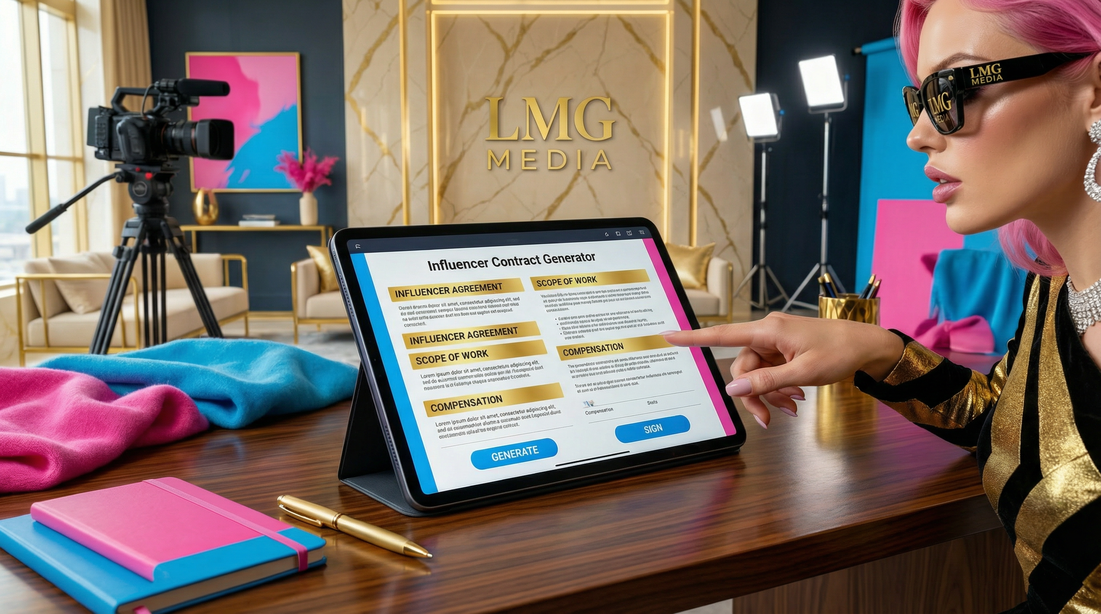
The $5,000 Problem
Picture this: you've just landed your biggest deal yet. A brand is offering you $5,000 for a month-long campaign, and you're thrilled. When their contract arrives, you skim through it, see your rate prominently displayed, and sign on the dotted line. Finally, a major opportunity.
Three months later, the dream has turned into a nightmare. The brand has been running paid advertisements with your content, something you never charged extra for. What you thought was a 30-day agreement has stretched to six months of usage. The brand is refusing to pay the final $2,500 because there were no clear payment terms in the contract. And buried deep in clause 8, you discover you can't work with any of their competitors for an entire year. When you add it all up, you've just lost more than $8,000 in additional fees and future opportunities.
This scenario happens more often than you'd think, and it happens because most influencers rely on generic contract templates that don't actually protect them when things go wrong.
Why Generic Templates Fail You
Search online for "influencer contract template" and you'll find dozens of downloadable options. They all promise to protect your interests, but they share the same fundamental flaws. These fill-in-the-blank contracts use one-size-fits-all language that tends to favor brands over creators. They miss critical protections specific to your situation and simply can't match the unique details of your specific deal.
The problem is that every deal is fundamentally different. A single Instagram post is nothing like a 10-post campaign. Organic usage rights are completely different from paid advertising rights. A 30-day license is worlds apart from perpetual rights. A $500 collaboration requires different protections than a $5,000 partnership. One template simply cannot cover all these scenarios effectively.
Here's the uncomfortable truth: most of those templates you find online were written by brands, for brands. They're designed to protect the company hiring you, not the creator doing the work.
What Actually Happens Without Proper Contracts
The most common issue creators face without proper contracts is payment problems. When your agreement says something vague like "we'll pay you when the campaign ends," you're left wondering when that actually is. Without requiring any upfront payment, you're vulnerable to the brand canceling and leaving you with nothing. When there are no late payment penalties specified, brands can pay you six months later with no consequences. And without a kill fee clause, they can cancel after you've already created the content, leaving you with hours of work and zero compensation.
A proper contract changes everything. You should always structure deals with 50% payment upfront and 50% on delivery. Payment should be due within 30 days of your invoice, with a 10% late fee per month for overdue payments. And you should always include a 50% kill fee if the project is cancelled mid-way through.
Usage rights create another set of nightmares when contracts are vague. When a brand's contract says they can "use content as needed," that could mean forever and everywhere. You might create content for $1,000 only to see them run $100,000 in paid advertising campaigns with your face. You agreed to Instagram posts, but suddenly your image appears on billboards across the country. You thought the usage period was 90 days, but your content is still live on their channels two years later.
Proper usage terms are incredibly specific. They should name the exact platforms, such as Instagram only, not "all social media." They should define a specific duration, like 90 days, not perpetual usage. They should specify the usage type, making clear whether this is for organic posts only or if paid ads are included. And they should clearly state that all rights revert back to you after the expiration period.
Exclusivity clauses can trap you in ways you don't realize until it's too late. A vague clause stating that you "cannot work with similar brands" leaves you wondering what counts as similar. A 12-month exclusivity period for a $1,000 deal is far too restrictive for what you're being paid. Being blocked from working with entire categories means you're losing out on significant income opportunities.
Smart exclusivity terms name specific competitors by name, not broad categories. They limit the exclusivity period to 30-60 days maximum unless you're being paid a premium for longer restrictions. And they keep restrictions category-specific, like "fitness supplements" rather than "all fitness brands."
Even revisions can spiral out of control without clear limits. When your contract says the brand "can request revisions as needed," you have no protection against endless rounds of changes. You might find yourself redoing content seven times because no limit was specified. And without a timeline for approval, you could be waiting weeks for feedback while your schedule backs up.
A solid revision policy caps rounds at a maximum of two. Additional revision rounds should cost 20% of the original fee each. And the brand should be required to approve your work or provide feedback within 48 hours, keeping the project moving forward.
What a Creator-Friendly Contract Includes
Every creator-friendly contract starts with clear payment terms. The total amount should be specified down to the dollar, with a payment schedule that typically follows the 50% upfront standard. You need a firm payment deadline, usually within 30 days of invoice, and clear late payment penalties to enforce it. The contract should specify your preferred method of payment and include a kill fee if the brand cancels the project.
Protected usage rights are equally critical. Rather than accepting vague language about "social media," specify the exact platforms like Instagram or TikTok. Define the exact duration, such as 90 days rather than "perpetual." Clarify the usage type, distinguishing between organic posts only and paid advertising. Add geographic restrictions if needed, and ensure the contract states that all rights revert to you as the creator after the expiration period.
Your deliverables need to be crystal clear. State exactly what you're creating, such as three Reels and five Stories, not a vague range. Include specifications about length, format, and style. Establish a firm delivery timeline and include a creative control clause that protects your authentic voice and style.
A revision policy protects your time and sanity. Specify the number of rounds included, typically two as the industry standard. State the cost for additional rounds, usually 20% of the original fee per round. Include a timeline for brand feedback, typically 48-72 hours, and define what counts as "reasonable revisions" versus requests for entirely new content.
If your contract includes exclusivity, it should be carefully limited. Name specific competitors rather than using broad categories. Make it time-limited, typically 30-60 days rather than months or years. Keep it category-specific rather than a blanket prohibition on entire industries. And ensure you're being compensated appropriately for the opportunities you're giving up.
Intellectual property clauses protect your long-term rights as a creator. You should always retain copyright of your work. The brand gets a license to use your content, not ownership of it. You should maintain the right to use the content in your portfolio and promotional materials. And the contract should clearly state what happens after the usage period ends.
FTC compliance protections ensure both parties understand their responsibilities. The contract should state that both the brand and creator are responsible for compliance. Disclosure requirements should be spelled out clearly. And you should never accept liability for issues with the product itself, only for following disclosure guidelines.
Finally, termination terms clarify how either party can end the agreement. The contract should explain what happens to payment if the project is cancelled at various stages. It should address what happens to content that's already been created. And it should specify the notice period required before termination takes effect.
Real Examples: Good vs. Bad Clauses
Understanding the difference between weak and strong contract language can save you thousands of dollars. Take payment terms, for example. A bad clause might read: "Brand will compensate Creator upon completion of services." This leaves you wondering when completion actually occurs. Is it after you post? After the entire campaign ends? There's no timeline specified and no protection if they simply never pay.
A good payment clause is specific and protective: "Brand agrees to pay Creator $3,500 according to the following schedule: (a) 50% ($1,750) upon contract signing, (b) 50% ($1,750) upon delivery of final content. Payment shall be made within 30 days of invoice date. Late payments incur 10% penalty per month." This version includes clear amounts, a clear timeline, clear consequences for late payment, and the protection of 50% upfront.
Usage rights language can be equally problematic when it's vague. A bad clause states: "Brand may use Content for marketing purposes." This could mean any platform, forever, including paid ads. A good usage rights clause is surgical in its precision: "Brand is granted a non-exclusive license to use Content on Brand's Instagram account for organic (non-paid) posts only, for 90 days from first publication. After 90 days, all usage rights revert to Creator. Paid advertising requires separate agreement and additional compensation." This version specifies the platform, duration, usage type, and has a clear expiration with rights reverting to you.
Revision clauses demonstrate the same pattern. A bad revision clause reads: "Creator will make reasonable revisions based on Brand feedback." This puts the brand in control of defining "reasonable" and sets no limit on the number of rounds. A good revision clause protects your time: "Creator agrees to provide up to two (2) rounds of reasonable revisions. Additional revisions require additional compensation at 20% of original fee per round. Brand must provide revision feedback within 48 hours of content delivery." This version limits the rounds, establishes clear costs for extras, and sets a deadline for the brand to respond.
Common Contract Mistakes to Avoid
One of the most costly mistakes is failing to include a kill fee. When a brand cancels after you've created content, you've invested hours of your time but receive nothing in return. The industry standard fix is to always include a kill fee clause: 50% if the project is cancelled mid-way through, and 100% if it's cancelled after you've delivered the final content.
Another expensive mistake is agreeing to perpetual rights at your base rate. When you charge $1,000 for a post and the brand gets to use it forever in paid advertising campaigns, you're leaving massive amounts of money on the table. Perpetual rights should cost at least three times your base rate at minimum. Even better, make it a policy to never agree to perpetual rights at all. Usage periods should always have an end date.
Vague deliverables cause constant friction throughout a project. When your contract says "3-5 posts," the brand will inevitably expect five. When it says "high-quality content," you'll end up doing three rounds of revisions because quality is subjective. The fix is to be absolutely specific: "Exactly 3 Instagram Reels, 30-60 seconds each, in Creator's authentic style." This removes all ambiguity.
Many creators forget to set a timeline for the brand's responsibilities. You deliver your content on time, but the brand takes three weeks to approve it. The campaign gets delayed, and suddenly they're blaming you for the missed deadlines. Protect yourself by including: "Brand must approve or provide feedback within 48-72 hours. Delays beyond this period are Brand's responsibility." This keeps the project on schedule and documents where delays actually occur.
Perhaps the biggest mistake is simply signing a brand's contract without making any changes. Brands send contracts written by their lawyers, and those lawyers are working for the brand's benefit, not yours. The solution is simple but requires confidence: always negotiate. Add creator protections to their document. Remove or modify unfavorable terms. Professional brands expect this. It's part of doing business, and asking for fair terms actually increases their respect for you.
How to Customize Contracts for Different Deals
Not every deal requires the same level of contract complexity. For a single post deal worth $500 to $2,000, you can keep things relatively simple. Include a clear deliverable like one Reel, straightforward payment terms with either a 50/50 split or 100% upfront, usage rights for 30-90 days of organic posts, one to two revision rounds, and basic FTC compliance language. You can skip complex exclusivity clauses, lengthy termination sections, and extensive legal jargon.
As you move up to multi-post campaigns worth $3,000 to $8,000, you need more protection. Create a detailed deliverable schedule so both parties know exactly what's expected and when. Structure staggered payments tied to specific deliverables or project milestones. You can agree to broader usage rights, but they should still be clearly limited in scope and duration. Your revision policy becomes crucial at this level because you're creating multiple pieces of content. A kill fee is important protection for your time investment. And if the brand requires exclusivity, make sure the terms are fair and you're compensated for it.
Long-term partnerships worth $10,000 or more require a full, comprehensive contract. Include all sections with robust termination clauses and clear performance expectations on both sides. Structure a regular payment schedule, often monthly or tied to quarterly reviews. Build in periodic check-ins to ensure the partnership is working for both parties. Include extension options if you want to continue the relationship. And always have a clear exit strategy that protects both parties if the partnership needs to end.
Each deal type needs different levels of protection, and your contract should reflect the complexity and value of the specific opportunity.
When to Use a Contract (Always)
You might be tempted to skip a contract for small deals, thinking "it's just $500." But even small deals need contracts, and here's why: small brands can still ghost you on payments just as easily as big ones. Usage rights still matter regardless of the dollar amount. Your time and creative energy have value whether you're being paid $500 or $5,000. And using a contract sets a professional tone that often leads to better working relationships and future opportunities.
Some creators skip contracts when they feel the brand seems trustworthy. But here's the thing: contracts aren't about trust. They're about clarity. Even when you're working with great brands that have the best intentions, contracts prevent misunderstandings before they happen. They set clear expectations that keep everyone aligned. They protect both parties from miscommunication. And they demonstrate that you're a serious professional who values their work.
When a brand sends you their contract, many creators simply sign it and move forward. That's a mistake. Their contract is a great starting point, but you need to review every single clause before signing. Add creator protections that aren't included. Remove or modify unfavorable terms that put you at a disadvantage. Then negotiate the changes with the brand. Never sign a brand's contract without reviewing it thoroughly and adjusting it to protect your interests.
How to Build Your Contract
The traditional approach to contract creation involves downloading a generic template, filling in the blanks with your information, and hoping it covers everything you need. The problem with this approach is that you're probably missing key protections specific to your deal, and you won't know it until something goes wrong.
A smarter approach starts with the specific details of your deal. Choose only the sections relevant to your situation. Customize each clause to match your specific agreement. Build a contract that fits your exact deal rather than trying to make your deal fit a generic template. This is the fundamental difference between a contract that actually protects you and one that just looks official.
The Real Impact of Proper Contracts
Before implementing proper contracts, creators commonly experience certain patterns of problems. They lose thousands of dollars to brands who ghost them after partial payment. Their content gets used in paid advertising campaigns without additional compensation. They spend hours doing eight or more revision rounds because no limit was set in their agreement. They discover too late that they can't work with major brands in their niche for six months because they didn't carefully read the exclusivity clause.
After implementing proper contracts, everything changes. With 50% payment required upfront, you never get ghosted again because you've already received half your fee before delivering anything. When brands want to use your content in paid ads, it requires a separate agreement and additional compensation, often earning you thousands more per campaign. With a maximum of two revision rounds specified, you save ten or more hours per project that you can invest in other opportunities. And with exclusivity carefully limited to 30 days and specific competitors, you keep your calendar open for more lucrative opportunities.
One properly structured contract pays for itself ten times over, not just in the money it helps you earn, but in the money it prevents you from losing.
Start Protecting Yourself
Your content has real value. Your time has real value. The trust your audience places in you has real value. When you use generic templates that don't protect any of these assets, you're essentially working without a safety net.
The solution isn't complicated, but it does require taking contracts seriously. Stop relying on generic templates that were designed for someone else's needs. Build contracts that actually work for your specific deals, your specific niche, and your specific business model. Every collaboration you enter into deserves the protection of a solid, customized agreement.
Your creative work deserves the same level of professional protection that any other business provides its services. Start treating your contracts as seriously as you treat your content, and you'll see the results in your income, your peace of mind, and your ability to build sustainable creator business.
More from the desk
FULL INDEX · 54 →
LMG MEDIA · THE DESK
NO. 54 · FILED 24 JAN 2026 · LMG.MEDIA/BLOG
LMG.MEDIA/BLOG · © 2026
© 2026 LMG MEDIA
WHERE QUALITY BRANDS MEET ICONIC INFLUENCE