How to Negotiate Influencer Contracts Without Losing the Deal
Generic templates won't protect you. Here's how to build a contract that actually safeguards your work. You just signed a $5,000 brand deal. Congrats! But buried in that contract you didn't fully read? Clauses that let them use your content in paid ads forever, lock you out of working with competitors for a year, and never actually require them to pay you. Generic contract templates won't protect you—they're written by brands, for brands. Every influencer deal is different, and your contract needs to reflect that. Here's how to stop leaving thousands of dollars (and your rights) on the table with contracts that actually protect you.
LMG MEDIA TEAM
· 24 JAN 2026 · 12 MIN READ
The Email That Changed Everything
Sarah had been creating content for two years when a major beauty brand reached out. Her first four-figure deal. $3,500 for a campaign.
When their contract arrived, she spotted problems immediately. No upfront payment. Perpetual usage rights. Six-month exclusivity. She wanted to push back, but the voice in her head kept saying: "What if they walk away? What if I seem difficult? What if I never get an opportunity like this again?"
So she signed it.
Three weeks into the campaign, the brand requested the fifth round of revisions. Sarah had spent 20 hours on content she was being paid $3,500 for. When she mentioned the revision count, the brand manager said, "The contract says reasonable revisions, and we feel these are reasonable."
Sarah had no leverage. She'd already signed.
Here's what she wishes she'd known: brands expect you to negotiate. In fact, they respect you more when you do. The contract they send isn't their final offer—it's their starting position.
Why Brands Send Contracts That Favor Them (It's Not Personal)
Every brand's legal team has one job: protect the company. That means their first contract draft will include terms that benefit them. This isn't malicious or a red flag. It's standard business practice.
Think about it from their perspective. If they send 100 contracts and 80 creators sign without changes, they've just saved their company significant money on usage rights, exclusivity, and revision work. The 20 creators who negotiate? They get better terms, and the brand still works with them.
The brand isn't trying to scam you. They're running a business. They send their ideal terms, expecting professional creators to negotiate the terms that work for both parties.
This is why silence is the worst negotiation strategy. When you don't negotiate, you're not being "easy to work with"—you're signaling that you don't understand your value or the business side of content creation.
The Foundational Rule: Never Negotiate Without Your Own Contract
Here's where most creators make their first mistake. The brand sends their contract, the creator reads it, spots issues, then tries to negotiate via email: "Hey, I noticed the usage rights are perpetual. Could we do 90 days instead?"
This approach has a fatal flaw: you're negotiating from their document, on their terms, using their language. You're playing defense.
Professional creators flip this dynamic. Before you even start negotiating specific terms, you need your own contract that represents your ideal terms. This doesn't mean you're refusing their contract—it means you have a clear framework for what you want.
When you have your own contract, the conversation changes from "Can you change your clause 7?" to "Here's what a fair agreement looks like from my side. Let's find the middle ground."
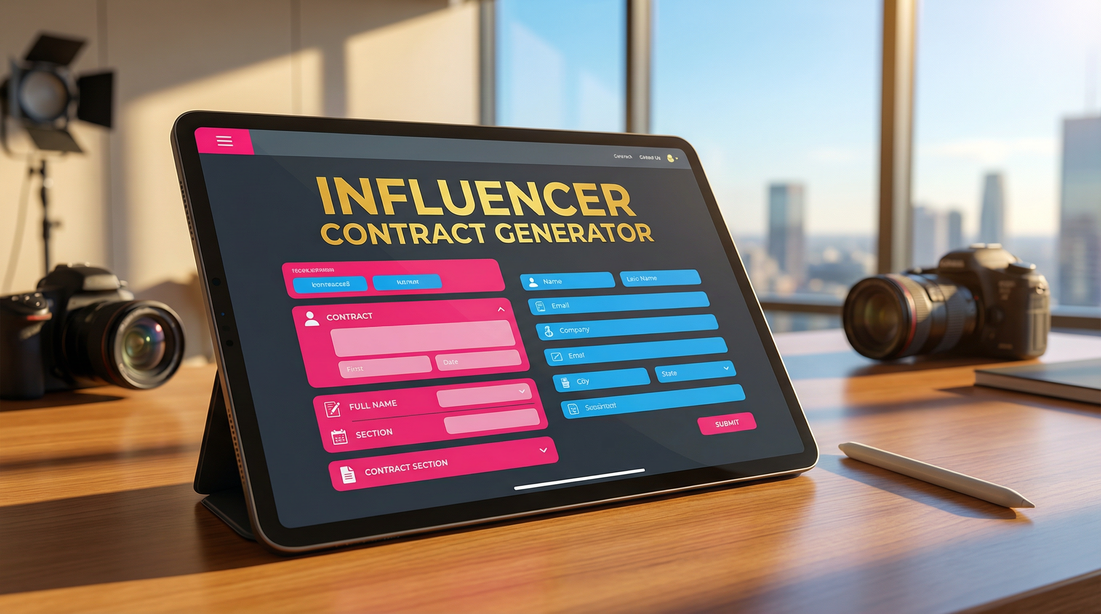
This is where having a solid contract template or generator becomes invaluable. You can't negotiate confidently if you don't know what you should be asking for.
The Three-Phase Negotiation Framework
Phase 1: The Initial Response (First 24 Hours)
When a brand sends their contract, your response in the first 24 hours sets the tone for everything that follows.
Never respond immediately with concerns. Instead, acknowledge receipt professionally: "Thanks for sending this over! I'm reviewing the agreement and will get back to you with any questions by [specific date, typically 2-3 days out]."
This does three things. It shows you're professional and organized. It gives you time to review thoroughly without pressure. And it signals that you take contracts seriously, which actually increases their respect for you.
During your review period, don't just read their contract. Pull up your own contract framework and compare the two documents side by side. Note every difference between what they're offering and what you want. Categorize these differences into three buckets:
Deal-breakers: Terms you absolutely won't accept (for example, perpetual rights at a base rate, or 12-month exclusivity for a small deal).
Important but negotiable: Terms you want to change but could compromise on (payment schedule, number of revisions, specific exclusivity length).
Nice-to-haves: Terms you'd prefer but won't fight hard for (specific invoice payment date, minor usage right details).
This categorization is crucial because you can't win every point. Knowing which battles to fight makes you a better negotiator.
Phase 2: The Counteroffer (Days 2-3)
When you send your counteroffer, structure matters more than most creators realize. Don't send a laundry list of problems with their contract. Instead, frame your response around mutual success.
Start with enthusiasm: "I'm excited to work together on this campaign. I've reviewed the agreement and have a few suggested adjustments that I think will help us both have a smooth, successful partnership."
Then present your changes in order of importance, but never label them as such. For each requested change, provide brief reasoning that benefits both parties, not just you: "I'd like to adjust the payment terms to 50% upfront and 50% on delivery. This helps me block out time in my schedule for your campaign and ensures we're both committed to the timeline."
Notice the framing: you're not saying "I don't trust you to pay me" even though protecting yourself from non-payment is exactly what you're doing. You're framing it as a mutual benefit that helps the project succeed.
For usage rights adjustments: "I'd like to limit the initial license to 90 days for organic posts, with the option to extend or expand to paid advertising at that point. This lets us see the campaign performance before committing to broader usage."
Again, you're framing perpetual rights limitations as a smart business decision (let's see results first) rather than as you being restrictive.
Here's the psychological trick that works: when possible, attach a number or option to your request. Instead of "Can we shorten the exclusivity period?" say "Would you be open to 60 days of exclusivity instead of 12 months, or we could discuss additional compensation for the longer period?"
You've just given them two options, both of which are better for you than their original term. They feel like they're choosing, not being told.
Phase 3: The Back-and-Forth (Days 4-7)
Most negotiations require at least one round of back-and-forth. The brand responds to your counteroffer, accepts some points, pushes back on others, maybe proposes compromises.
This is where most creators either cave completely or become rigid. Both approaches cost you money. The key is knowing which points to hold firm on and where to meet in the middle.
Hold absolutely firm on your deal-breakers. If they push back on 50% upfront payment, you can explain: "I understand this might be different from your usual process, but upfront payment is standard in my contracts for all brand partnerships. It protects both of our time investments in the project."
The phrase "standard in my contracts" is powerful because it positions this as your business policy, not a personal negotiation point.
For important but negotiable items, use the trading strategy. If they won't budge on payment terms, ask for something else: "I understand you need to process payment on delivery. Would you be willing to shorten the exclusivity period from 90 days to 45 days to balance that?"
You're showing flexibility while still improving your position.
For nice-to-haves, let them go without a fight. If you've won on payment terms and usage rights, don't nickel-and-dime them over whether revisions are due in 48 or 72 hours.
Throughout this phase, maintain enthusiasm about the partnership. Every email should include some version of "I'm looking forward to creating great content together" or "I think this campaign will be fantastic for both of us." You're negotiating contract terms, not showing reluctance about working together.
Specific Language That Works
Let's get tactical. Here are word-for-word phrases that work in actual contract negotiations.
When they push back on upfront payment: "I completely understand that might be different from your usual process. The 50% upfront structure is standard across my brand partnerships—it helps me block out dedicated time in my content calendar for your campaign. Would your finance team be able to accommodate this, or should we explore a milestone-based payment structure instead?"
When they want perpetual usage rights: "I'm definitely open to longer usage periods if needed for the campaign. However, perpetual rights at the base rate don't align with industry standards for content licensing. Could we structure this as 90 days included at the quoted rate, with an option to extend at [X] monthly fee? Or if perpetual rights are essential, we could discuss adjusting the base rate to reflect that broader license."
When exclusivity is too long: "I want to make sure I can give your brand the full focus it deserves during our partnership. However, [X] months of exclusivity would prevent me from working with several brands in my pipeline. Would you be open to [shorter period], or could we narrow the exclusivity to direct competitors only? For reference, the competitors I'd want to exclude would be [specific brand names]."
When revision rounds are unlimited: "I want to make sure we create content you absolutely love. To keep us both accountable to the timeline, I typically include two rounds of revisions in my projects, with additional rounds at [percentage] of the project fee. Does that structure work for your team's review process?"
When they won't include a kill fee: "I completely understand projects sometimes change direction. To protect both our time investments, I include a kill fee in all my contracts—50% if the project is cancelled before I deliver content, 100% if cancelled after delivery. This way we're both protected if circumstances change. Is that standard in your influencer agreements?"
Notice the pattern in all of these: You acknowledge their position, explain your reasoning as business standard (not personal preference), provide options when possible, and ask questions instead of making demands.
The Red Flags That Mean Walk Away
Not every deal is worth negotiating. Sometimes the brand's contract or response to your negotiation reveals that working together will be a nightmare. Here are the red flags that should make you seriously consider walking away.
If the brand refuses any negotiation whatsoever with the response "This is our standard contract, we can't make changes," that's a massive red flag. Professional brands understand that every partnership is unique and terms should be adjusted accordingly. Rigidity on their end usually signals rigidity throughout the project.
If they agree to your terms verbally or via email but won't put those changes in the actual contract, walk away immediately. "Don't worry, we'll honor what we discussed" is not legally binding. If they won't formalize what they've agreed to, they don't actually agree to it.
If they push back aggressively on industry-standard terms like upfront payment or limited revision rounds, question whether they've worked with professional creators before. Brands experienced in influencer marketing expect these terms.
If the negotiation takes more than two weeks without movement, they're either disorganized or not serious. Professional brands don't drag out contract negotiations for weeks.
And finally, if your gut tells you something feels off about how they're communicating or the terms they're insisting on, trust it. A contentious negotiation usually predicts a contentious working relationship.
After You Reach Agreement
Once you've negotiated terms you're both happy with, don't make the mistake of thinking you're done. Get everything finalized properly.
Make sure every agreed-upon change is reflected in the final contract document. Don't accept "we'll honor what we discussed via email." The contract is what matters legally.
Read the final version line by line before signing. Brands occasionally make mistakes when revising contracts, and you want to catch those before you sign.
Keep all email correspondence about the negotiation. If there's ever a dispute about what was agreed to, you'll want that paper trail.
And finally, approach the project with the same professionalism you showed during negotiation. You've set clear expectations, now deliver excellent work within those boundaries.
Why Most Creators Fail at Negotiation (And How to Fix It)
The number one reason creators fail at contract negotiation isn't lack of knowledge—it's lack of confidence. They know the contract is unfavorable, but they're afraid to push back.
This fear comes from operating without a framework. When you don't have your own contract that outlines what fair terms look like, every negotiation feels like you're making things up or being unreasonable.
This is exactly why having a solid contract template or using a contract generator is transformative for negotiations. You're not negotiating based on feelings or guesses—you're negotiating based on a professional framework that reflects industry standards and protects your interests.
When a brand pushes back on your requested changes, you're not defending personal preferences. You're explaining: "These terms are what I include in all my brand partnerships because they reflect industry standards and ensure successful collaborations for both parties."
That confidence comes from having a real framework, not from winging it with each new deal.
Start Negotiating Like a Professional
Every brand contract is a negotiation, whether you engage in that negotiation or not. Signing without changes is still a choice—it's just choosing to accept whatever terms they've offered.
Professional creators approach every contract strategically. They know their deal-breakers, they communicate clearly and professionally, and they're willing to walk away from unfavorable terms.
But you can't negotiate effectively if you don't know what you should be negotiating for. You need a framework that shows you what fair terms look like, what industry standards are, and what protections you should always include.
That's exactly why we built our Contract Generator. It's not just about generating a contract to send to brands—it's about giving you the framework you need to negotiate confidently when brands send their contracts first.
You'll see exactly what terms professional creators include, how to customize those terms for different deal sizes, and what language to use to protect yourself. Even if you end up signing the brand's contract instead of using your own, you'll know exactly what to negotiate for and how to communicate those requests professionally.
Stop going into negotiations hoping for the best. Start going in with a clear framework of what fair terms look like for your specific deal.
[Build Your Contract Framework →]
More from the desk
FULL INDEX · 54 →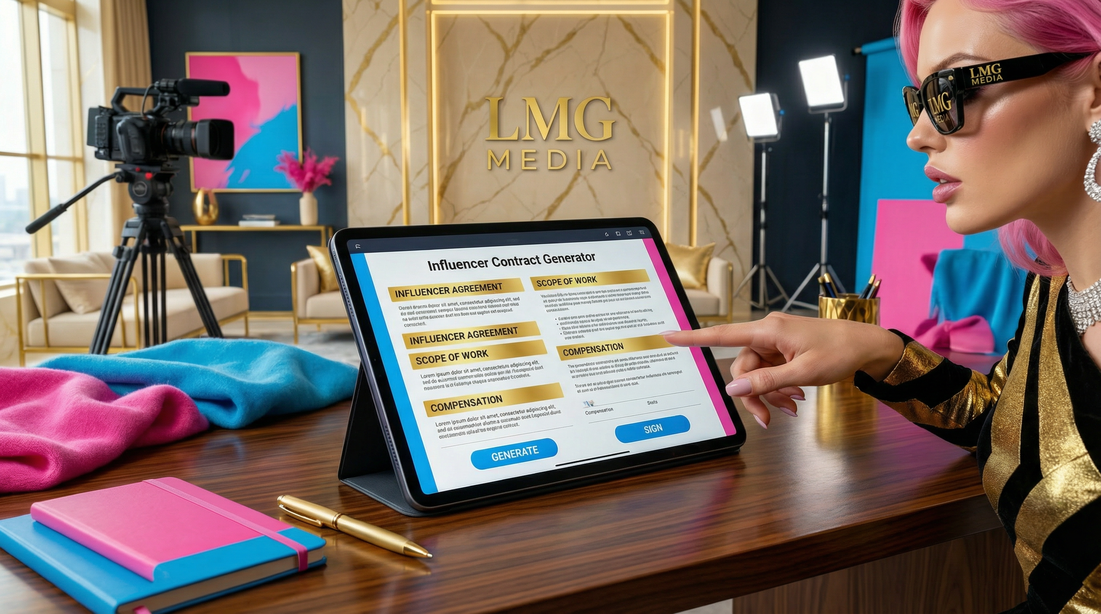
LMG MEDIA · THE DESK
NO. 53 · FILED 24 JAN 2026 · LMG.MEDIA/BLOG
LMG.MEDIA/BLOG · © 2026
© 2026 LMG MEDIA
WHERE QUALITY BRANDS MEET ICONIC INFLUENCE