
Instagram Influencer Content That Converts: Best Practices and Examples
Converting Instagram influencer content into actual sales requires far more than beautiful photos and large follower counts. The difference between influencer posts that drive thousands of dollars in revenue and those that generate nothing but likes comes down to specific, replicable elements that separate authentic recommendations from obvious advertisements.
LMG MEDIA TEAM
· 28 NOV 2025 · 23 MIN READ
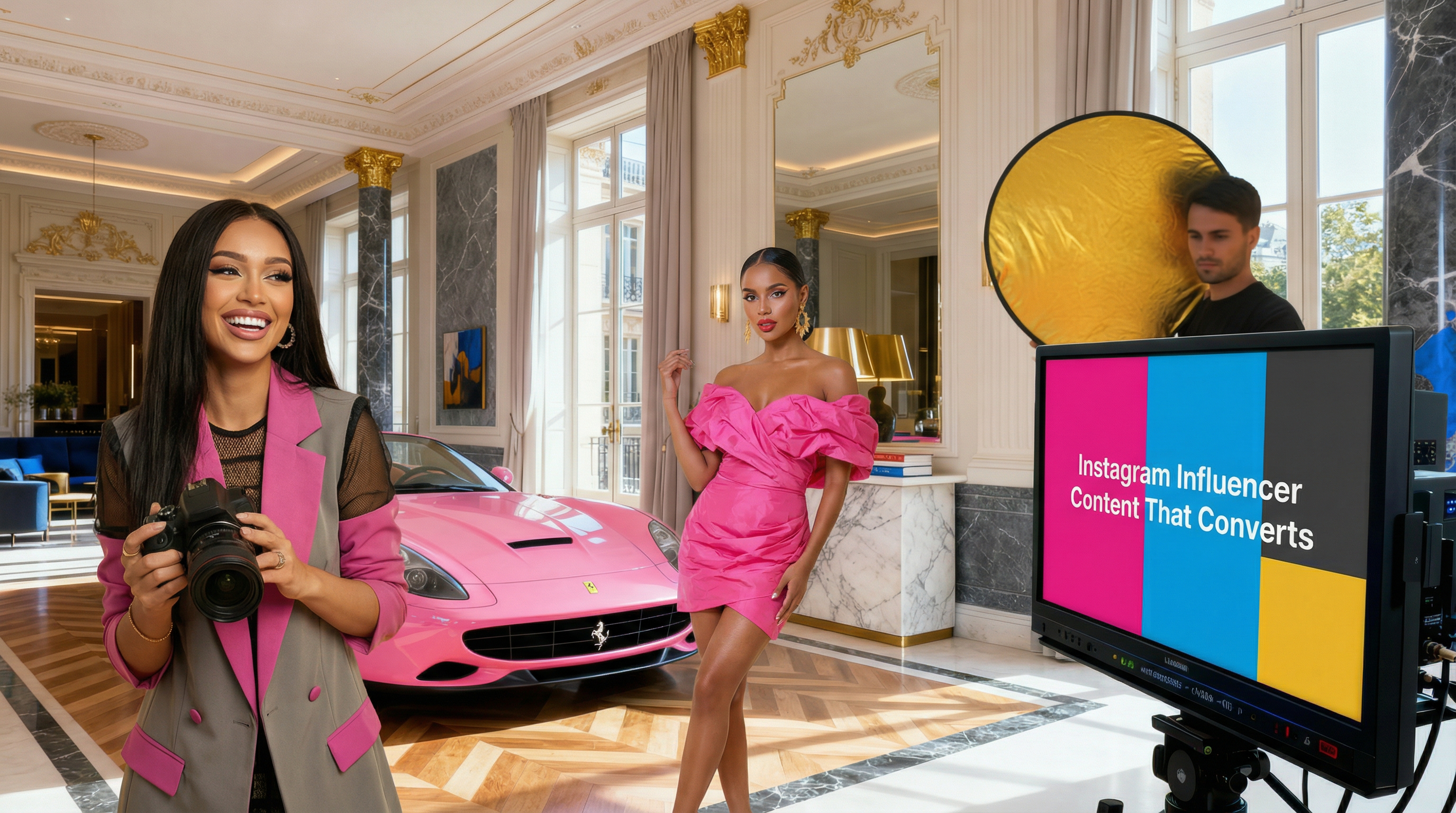
Most brands waste money on influencer partnerships because they focus on the wrong metrics. They chase follower counts and engagement rates while ignoring the psychological triggers that actually make audiences click "buy now." The reality is that a micro-influencer with 25,000 followers can outsell a celebrity with 2 million if their content incorporates the conversion elements that drive action.
The Psychology Behind Converting Content
Human beings don't make purchasing decisions rationally. We like to think we carefully weigh features, compare prices, and make logical choices, but neuroscience tells a different story. We make emotional decisions first, then rationalize them afterward with logic.
This is why the most converting influencer content tells stories rather than listing product features. When an influencer shares their personal struggle with acne and how a specific cleanser finally cleared their skin after years of trying everything else, audiences connect emotionally. They see themselves in that story. They feel hope that maybe this product could solve their problem too.
Compare that to an influencer who simply says "This cleanser is great, link in bio." There's no emotion, no connection, no reason to care. It's obviously a paid promotion, and audiences scroll right past it.
The trust threshold matters more than anything else. Research shows that 92% of consumers trust influencer recommendations over traditional advertising, but only when those recommendations feel genuine. The moment content crosses from authentic sharing into obvious selling, that trust evaporates and conversion rates plummet.
What Makes Content Feel Authentic
Authenticity isn't about being unpolished or unprofessional. It's about demonstrating genuine experience with a product in ways that can't be faked.
Specific details signal authenticity. When an influencer mentions that a moisturizer "absorbs in exactly 30 seconds" or that they "use one pump for their whole face," these granular observations only come from actual use. Generic claims like "amazing product" or "works great" could apply to anything and convince no one.
Honest limitations build more trust than pure praise. When an influencer mentions that a foundation has incredible coverage but only comes in 12 shades and might not work for very deep or very fair skin tones, audiences believe everything else they say. Perfection seems fake. Nuanced honesty feels real.
Timeline transparency shows genuine testing. Saying "after three weeks of daily use" is far more convincing than "I tried this and it's amazing." Real results take time, and audiences know it.
The Problem-Solution Framework
The most consistently high-converting influencer content follows a simple but powerful structure: problem, discovery, experience, results, recommendation. This framework works because it mirrors how we naturally share discoveries with friends.
Starting With Relatable Problems
Content that converts begins by articulating a problem the audience experiences. Not a vague problem, but a specific, frustrating situation they encounter regularly.
"My skin gets so dry in winter that my makeup won't stay on and I get flaky patches by noon" is specific enough that anyone who experiences this feels immediately seen and understood. "I have dry skin" is too generic to create connection.
"I can never find jeans that fit my waist without gaping at the back" speaks directly to a common frustration. "Jeans are hard to shop for" says nothing.
The more specific and relatable the problem, the more invested audiences become in learning the solution. They stop scrolling because they desperately want to know if this might finally be the answer they've been searching for.
The Discovery Moment
How the influencer found the product matters for credibility. "I saw this in a skincare group where people were raving about it" sounds more trustworthy than "Brand X sent me this." Even when products are gifted or sponsored, framing the discovery around genuine interest rather than cold outreach helps.
Explaining why they decided to try it despite initial skepticism adds authenticity. "I was hesitant because I'd tried five other protein powders that tasted terrible, but the ingredient list looked promising" shows thoughtful consideration rather than impulsive acceptance of free products.
Detailed Experience Sharing
This is where most influencer content fails. Instead of describing their actual experience using the product, they jump straight to "it's amazing, link in bio."
Converting content includes sensory details. What does it smell like? What's the texture? How does it feel on skin or taste or sound? These details can only come from genuine use.
It includes usage tips discovered through experience. "I found it mixes better with a blender than a shaker bottle" or "It works best if you apply it to damp skin" are insights that come from trial and error, not from reading a press release.
It acknowledges the learning curve. "The first two times I used it I applied too much and it felt greasy, but once I figured out the right amount it's perfect" is far more believable than "easy to use, perfect from day one."
Specific, Measurable Results
Vague claims about results don't convert. "My skin looks better" means nothing. "After two weeks the dry patches completely disappeared and after a month my makeup applies smoothly and lasts all day" is specific enough to be believable and compelling.
Before-and-after evidence, when relevant, provides visual proof. But the photos need to be clearly the same lighting, angle, and conditions or they backfire by seeming manipulated.
Comparison to alternatives helps audiences understand value. "This costs twice as much as the drugstore version I was using, but I'm not buying three other products to fix problems it caused, so I'm actually spending less overall" justifies premium pricing through logic.
The Recommendation Nuance
The final recommendation should never be "everyone needs this." That's both obviously false and unhelpful.
Instead, it should identify who this product is ideal for: "If you have dry or dehydrated skin, especially in winter, this is absolutely worth trying. If you have oily skin you might find it too heavy for daytime."
It should set realistic expectations: "This won't transform your skin overnight, but if you use it consistently for three to four weeks you should see noticeable improvement."
It should provide next steps: "Use code SARAH20 for 20% off through Friday. I just reordered my second bottle."
Strategic Call-To-Action Placement
Where and how influencers include calls-to-action dramatically affects conversion rates. Too early and audiences aren't convinced yet. Too late and they've already scrolled away. Too aggressive and it triggers ad-avoidance. Too subtle and they don't know what to do next.
The Mid-Content CTA Sweet Spot
The most effective placement comes after establishing value but before the content ends. After the influencer has explained the problem, shared their experience, and demonstrated results, audiences are most receptive to being told how to purchase.
"Tap the product tag to see the full ingredient list and reviews - I spent an hour comparing all their serums before choosing this one. Use code GLOW15 for 15% off your first order" combines information (ingredient list access), social proof (reviews), demonstration of due diligence (compared serums), and urgency with the discount code.
This works because it provides value (ingredient access, comparison information) alongside the sales ask. It doesn't feel pushy because the influencer has earned the right to make a recommendation through their detailed sharing.
Creating Urgency Without Pressure
Real scarcity creates urgency. "This has sold out twice since I first posted about it" or "Only available during their summer collection" gives audiences a genuine reason to act now rather than forget about it.
False urgency destroys trust. "Last chance!" every single day trains audiences to ignore urgency claims. "Sale ends tonight" when there's another sale starting tomorrow is manipulative and audiences see through it.
Limited-time discount codes work best with specific deadlines: "Code SAVE20 expires Sunday at midnight" creates real urgency. "Limited time offer" with no end date creates no urgency at all.
Multiple Touchpoint Strategy
Sophisticated influencer campaigns don't rely on a single CTA in a single post. They create multiple opportunities across different content formats.
A feed post might include: "Link in bio for more info and 15% discount." The Stories following that post might show: "Swipe up to shop - using my code SARAH15." A Reel might display: "Get yours at [brand].com/sarah - code in my bio." An IGTV might mention: "Everything linked below, code SARAH15 saves you 15%."
Each touchpoint catches audiences at different stages of interest. Someone who wasn't ready to buy from the feed post might be convinced after watching the detailed Reel review.
Content Formats That Drive Conversions
Different Instagram content formats serve different purposes in the conversion journey. Understanding which formats work best for different objectives helps brands brief influencers effectively.
Instagram Feed Posts: The Foundation
Feed posts provide permanent, highly visible content that appears in followers' main feeds and can be discovered through hashtags and Explore page for months after posting. They're ideal for detailed product showcases that audiences will want to reference later.
Single image posts work best when the photo itself tells a compelling story. A dramatic before-and-after transformation, a product shown solving a specific problem, or an aspirational lifestyle shot that makes audiences want that life (and believe the product is part of achieving it).
The caption on single-image posts needs to do heavy lifting. It should start with a hook that makes people tap "more" to read the rest. "I fixed my skin barrier in 14 days with one $18 product" is far more compelling than "Loving this new skincare."
After the hook, the caption should follow the problem-solution framework described earlier, ending with a clear CTA. Captions between 150-300 words typically perform best - long enough to tell the full story but not so long that readers give up.
Carousel posts generate 1.4x more reach and 3.1x more engagement than single images according to Instagram's data. They're perfect for showing multiple angles, demonstrating a process, or comparing options.
The structure matters tremendously. The first image is the hook that stops the scroll - show the most compelling visual first, not the product box. Subsequent slides can show details, usage demonstration, results, and end with product information and CTA.
A skincare carousel might progress: Slide 1 (clear, glowing skin result), Slide 2 (what the skin looked like before), Slide 3 (the three products used), Slide 4 (how to apply each one), Slide 5 (timeline for results), Slide 6 (where to buy with discount code).
Instagram Stories: The Urgency Driver
Stories create urgency through their 24-hour lifespan. "Available now" or "Code expires tonight" feels more pressing in a Story than in a permanent feed post.
The multi-slide format allows for deeper storytelling than static posts. An influencer can take audiences through an unboxing (slide 1-2), first impressions (slide 3-4), detailed demonstration (slide 5-7), results (slide 8-9), and purchase information (slide 10) in a way that feels like watching it happen in real-time.
Swipe-up links (for accounts with 10,000+ followers) or link stickers (for all accounts) provide direct pathways to purchase with minimal friction. "Swipe up to shop" requires one action. "Link in bio" requires exiting the Story, going to the profile, finding the link, clicking it - that's four actions and most people abandon.
Interactive elements drive engagement and gather data. A poll asking "Have you tried this?" gives the influencer feedback while making audiences think about whether they should try it. A question box inviting "What questions do you have?" shows the influencer cares about genuinely helping rather than just selling.
Story Highlights convert Stories from ephemeral to evergreen. An influencer can create Highlights organized by product category, allowing new followers to binge reviews months after the original Stories aired. Someone discovering an influencer today can watch their skincare Highlight and see detailed reviews of ten different products in one sitting.
Instagram Reels: The Discovery Engine
Reels reach 2-5x more accounts than follower counts because Instagram aggressively promotes them to non-followers through Explore pages and the Reels tab. This makes them the best format for reaching new audiences, but conversion is trickier because viewers might not know or trust the influencer yet.
The hook is everything in Reels. The first 1-3 seconds determine whether someone keeps watching or swipes to the next Reel. A bold text overlay like "I tested 5 mascaras so you don't have to" or a visual pattern interrupt like a dramatic before-after flash stops the scroll.
Trending audio increases reach dramatically. Reels using trending sounds get algorithmic preference. However, the audio needs to feel natural with the content, not forced. An influencer awkwardly dancing to trending audio with a product feels desperate. An influencer using that same trending audio as background for quick outfit changes showcasing different ways to style a jacket feels creative.
Text overlays are essential because 80% of Reels are watched with sound off. Every key point needs to be visible on screen, not just spoken. "This $18 cream cleared my dry skin in 2 weeks" displayed as text means even silent scrollers get the message.
Converting Reels tend to be 15-30 seconds. This length forces extreme conciseness while maintaining high completion rates. Longer Reels (45-90 seconds) can work for complex demonstrations but lose viewers before the CTA unless every second provides value.
IGTV and Long-Form Video
Long-form content (3-15 minutes) works for detailed reviews, try-on hauls, tutorials, and comparison content where audiences specifically seek comprehensive information.
The audiences who choose to watch long-form content are higher-intent by definition. They're investing significant time, which indicates serious interest. Conversion rates from IGTV viewers often exceed other formats even though reach is lower.
Structure matters more in long-form. The first 30 seconds need to promise specific value and set expectations: "I'm testing five different foundations today, showing you application, wear test after 8 hours, and my final recommendations by skin type."
Including chapter markers or verbal signposts helps: "First let's look at coverage," then later "Now let's talk about lasting power," then "Finally, here's who each one is best for." This structure keeps viewers oriented and prevents them from dropping off because they're lost or bored.
The CTA can be longer and more detailed in long-form. An influencer can spend 30-60 seconds explaining not just where to buy but also how to choose the right shade, what to expect during shipping, how their discount code works, and what their return policy is. This comprehensive information addresses objections that might prevent purchase.
Social Proof Integration
Audiences trust influencers more than brands, but they trust collective wisdom most of all. The most converting content doesn't just share one person's opinion - it demonstrates that many people have had similar positive experiences.
Leveraging Community Validation
When influencers reference their audience's reactions to previous recommendations, they borrow credibility from the crowd. "After I posted about this last month, 200+ of you DM'd me saying you tried it and loved it" provides social proof at scale.
Sharing follower feedback creates a virtuous cycle. An influencer posts a Story showing messages from followers raving about a product. New audiences see that many real people bought it and had success. This makes them more likely to try it, and some will message their own success, providing more content for the influencer to share.
Reposting user-generated content showing customers using the product demonstrates that it works for real people, not just the influencer. If an influencer shares ten different followers' before-and-after photos or styling shots, that's far more convincing than just their own experience.
Addressing Skepticism Directly
The most sophisticated influencers acknowledge skepticism upfront. "I know you're thinking 'another sponsored skincare post,'" signals awareness that audiences are defensive. Following with "but I've been using this for four months, way before they reached out for a partnership" reframes the relationship as genuine user-turned-partner rather than paid shill.
Sharing the selection process builds trust. "I got offers from three different protein powder brands this month and turned down two because after trying them, I didn't love them enough to recommend" shows the influencer has standards and doesn't promote everything.
Discussing what didn't work creates credibility for what did. "I tried their serum and hated it - way too sticky. But their moisturizer is incredible" shows honest assessment rather than blanket endorsement of a brand's entire line.
Optimizing for Different Purchase Decisions
A $15 impulse purchase requires different content than a $500 considered purchase. The most effective influencer briefs account for these differences.
Low-Cost Impulse Purchases
For products under $30, the content can be shorter and the CTA more immediate. The goal is to make the purchase feel low-risk and easy.
Emphasizing the price works well: "Under $20 and it lasts three months - that's like $6.50 per month." Breaking down cost this way makes it feel almost free.
Comparison pricing provides context: "The salon version costs $45 for half the amount. This is $18 and works just as well." Suddenly $18 feels like a steal.
Removing purchase friction matters most. "It's on Amazon Prime so you'll have it in two days" or "Available at Target so you can grab it during your regular shopping" eliminates the excuse that ordering is complicated.
High-Value Considered Purchases
For products over $100, audiences need more information and more convincing. The content should be comprehensive, addressing objections and providing ROI justification.
Cost-per-use calculations help: "Yes, this jacket costs $200, but I wear it 4-5 times per week. Over a year that's 200+ wears, which is less than $1 per wear. My $50 jackets never last more than a season and I get tired of them quickly."
Comparison to alternatives justifies premium pricing: "I was buying $30 face creams monthly that didn't work. This $120 cream lasts four months and actually solved my dry skin. I'm spending $30/month on this versus $30/month on products that failed, but now I'm getting results."
Long-term value proposition matters: "The subscription saves you 20% and ensures you never run out. Since consistency is key for results, the subscription actually makes sense" transforms a subscription from a money grab into a customer benefit.
Showing sustained satisfaction over time proves value: "I bought this six months ago and I'm now reordering my second one. If I didn't love it, I wouldn't repurchase" is the strongest possible endorsement.
The Role of Aesthetics in Conversion
Beautiful content stops the scroll, but aesthetics alone don't convert. The content also needs to demonstrate product benefits clearly. The most converting influencer content balances aesthetic appeal with functional demonstration.
When Polish Helps
Professional photography quality signals that the product and the influencer are legitimate. Blurry, poorly lit photos suggest amateurism that makes audiences question whether they should trust the recommendation.
Consistent visual style helps audiences immediately recognize the influencer's content. When someone has developed a signature aesthetic - a specific editing style, color palette, or composition approach - their content stands out in busy feeds.
Aspirational scenarios create desire. Showing a product in a beautiful setting that audiences want to be in (a sun-drenched kitchen, a perfectly organized closet, a luxurious bathroom) makes them associate the product with that aspirational lifestyle.
When Authenticity Trumps Polish
For some products and audiences, overly polished content actually hurts conversion. If an influencer is recommending a budget-friendly cleaning product but photographing it in a mansion, there's cognitive dissonance. The audience can't relate.
Real-life settings work better for everyday products. A busy mom showing a meal prep tool in her actual cluttered kitchen with kids in the background feels more trustworthy than a styled shoot in a pristine kitchen that doesn't exist in real life.
Unedited video demonstrations prove products work. A time-lapse of a cleaning product removing a stain in real-time can't be faked. A makeup application filmed in one continuous take shows the actual result rather than edited perfection.
Before-and-after photos in truly identical conditions provide credible proof. Same lighting, same angle, same expression, but clear visible difference in the relevant aspect (skin clarity, organization level, etc.) creates trust.
Testing and Optimization
The brands seeing the strongest ROI from influencer marketing don't just run campaigns - they systematically test variables and optimize based on results.
What to Test
Content format testing reveals what resonates with specific audiences. For one influencer partnership, create the same basic content in different formats: a carousel post, a Reel, and a Story series. Track which drives the most clicks, conversions, and revenue.
Messaging testing identifies what benefits matter most. Have half your influencers emphasize sustainability while the other half emphasizes performance. See which message drives better response.
CTA testing optimizes conversion mechanics. Compare "link in bio" versus unique discount codes versus swipe-up links. Track which generates more actual purchases, not just clicks.
Timing testing finds optimal moments. Try posting similar content on Tuesday morning versus Saturday afternoon versus Thursday evening. Conversion rates often vary significantly by day and time.
Offer testing determines what motivates purchase. Does "20% off" or "free shipping" or "buy one get one 50% off" generate more orders? Does urgency ("ends tonight") or scarcity ("only 50 left") work better?
How to Test Properly
Test one variable at a time. If you change both the content format and the message simultaneously, you won't know which caused the performance difference.
Ensure statistically significant sample sizes. One influencer trying one approach isn't enough data. You need at least 5-10 data points per variant to draw reliable conclusions.
Control for other variables. If possible, test variations during the same time period, with similar audience sizes, to reduce confounding factors.
Document everything. Create a testing log tracking what you tested, the hypothesis, the results, and the learnings. This institutional knowledge becomes increasingly valuable over time.
Common Mistakes That Kill Conversion
Even with perfect influencer selection and strong content creation, certain mistakes consistently undermine conversion potential.
Mistake 1: Treating All Platforms Identically
Content that works on Instagram won't necessarily work on TikTok or YouTube. Instagram users expect more polish, while TikTok users want raw authenticity. Repurposing content across platforms without adaptation usually fails.
The pacing differs too. Instagram feed posts can include long captions that users scroll through, while TikTok and Reels require information conveyed in seconds through on-screen text and quick cuts.
Mistake 2: Forcing Unnatural Product Integration
When a product feels awkwardly shoehorned into content, audiences notice and trust plummets. A fashion influencer suddenly promoting a VPN service feels off-brand and suspicious. Even if they genuinely use it, their audience comes for fashion content and won't be receptive.
The product integration should feel inevitable given the content context. A home organization influencer showing how they organize cleaning supplies naturally leads to discussing which cleaning products they prefer. That same influencer doing a skincare routine feels forced unless they've established that as part of their content.
Mistake 3: Overusing the Same Influencer
Audiences develop banner blindness even to influencers they follow. If the same creator posts sponsored content for your brand every single week, followers start tuning it out. The recommendation loses impact through oversaturation.
Strategic frequency matters. Once every 4-6 weeks maintains presence without overexposure. More frequent posting might work if it's varied content types (one feed post, then later Stories, then a Reel) rather than the same format repeatedly.
Mistake 4: Neglecting Mobile Optimization
Over 80% of Instagram browsing happens on mobile, yet many brands send influencers to landing pages that aren't mobile-optimized. Slow loading, difficult navigation, or forms that are hard to complete on a phone kill conversion regardless of how perfect the influencer content was.
The entire purchase path needs to be tested on mobile. Can someone easily see the product, read reviews, add to cart, and checkout on their phone in under two minutes? If not, fix that before spending money driving mobile traffic.
Mistake 5: Ignoring the Completion Journey
Getting someone to click is only the beginning. What happens after they land on your site determines whether that click becomes a customer.
The landing page should acknowledge where they came from. "Welcome! Influencer Sarah sent you. Here's the 15% discount she mentioned." This confirmation that they're in the right place and their code will work reduces abandonment.
The product description should reinforce what the influencer said. If the influencer emphasized sustainability, those environmental benefits should be prominent on the product page. Consistency across touchpoints builds trust.
Cart abandonment emails specifically for influencer traffic convert better when they reference the influencer. "Still thinking about the moisturizer Sarah recommended? Complete your order now and save 15% with code SARAH15" performs better than generic abandonment emails.
Frequently Asked Questions
What's the ideal caption length for conversion-focused Instagram posts?
Caption length should match complexity. For straightforward products with simple benefits, 150-200 words suffices to tell the story, address basic objections, and include a clear CTA. For complex products requiring more explanation, 300-400 words allows for thorough education without losing readers. Beyond 500 words, engagement typically drops as attention wanes. The key is providing exactly enough information to drive the purchase decision, no more and no less.
Should sponsored content always include discount codes?
Discount codes serve multiple purposes beyond just incentivizing purchase. They provide precise attribution, allowing you to track exactly which sales came from which influencer. They create urgency when given expiration dates. They make audiences feel special for following the influencer. However, constant discounting can devalue your brand. The best approach is using codes strategically - during campaign launches, for first-time purchases, or during key sales periods - rather than having every influencer offer a discount year-round.
How do you make sponsored content not look like an obvious ad?
The key is genuine experience over promotional language. Influencers should share their actual journey with the product - why they tried it, what they noticed during use, specific results over time, and honest limitations. Content that says "This amazing product will transform your life, link in bio" screams advertisement. Content that says "I struggled with this problem for months, tried five solutions that didn't work, then discovered this product and here's specifically how it helped over three weeks" feels like authentic sharing even when properly disclosed as #ad.
What's more effective - one comprehensive post or a series over time?
Series outperform single posts significantly. The marketing rule of seven suggests consumers need multiple touchpoints before purchasing. A series allows the influencer to show their journey - first impressions in week one, progress updates in week two, final results in week three. This builds anticipation, provides multiple opportunities for audiences to discover the content, and demonstrates sustained satisfaction rather than just initial hype. Plan for 3-4 pieces of content per influencer partnership spread over 4-6 weeks for optimal impact.
Should you let influencers have complete creative freedom?
The sweet spot is guided freedom. Provide clear information about your product, key messages you want conveyed, required disclosures, and brand guidelines, but allow influencers to determine how to communicate those things in their authentic voice and style. Overly scripted content kills authenticity and engagement. But complete freedom risks off-brand content or missed key selling points. The brief should cover the what (key benefits, target audience, specific claims) while leaving the how (format, style, tone, specific words) to the influencer's expertise.
How long should you wait before judging campaign success?
Immediate metrics like reach and engagement appear within 48 hours, providing quick feedback on content resonance. Website traffic and initial conversions materialize within one to two weeks as interested audiences click through and explore. However, full campaign impact takes 30-60 days to materialize as some consumers research extensively before purchasing. Additionally, track influenced conversions where someone sees influencer content but later purchases through another channel like branded search or direct site visit. Comprehensive ROI calculation requires tracking for at least 60-90 days post-campaign.
More from the desk
FULL INDEX · 54 →

LMG MEDIA · THE DESK
NO. 25 · FILED 28 NOV 2025 · LMG.MEDIA/BLOG
LMG.MEDIA/BLOG · © 2026
© 2026 LMG MEDIA
WHERE QUALITY BRANDS MEET ICONIC INFLUENCE